.avif)

How to Send a Networking Follow Up Email That Builds Relationships
On This Page
You meet someone interesting at a conference, exchange contact information, and promise to stay in touch. Then nothing happens. The connection fades before it ever becomes real. This gap between meeting someone and building an actual professional relationship is where most networking efforts fall apart, and it's precisely where a well-crafted follow-up email makes all the difference.
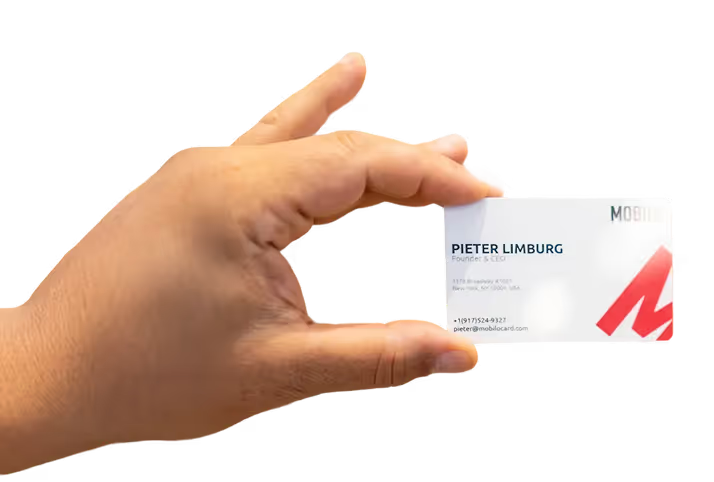
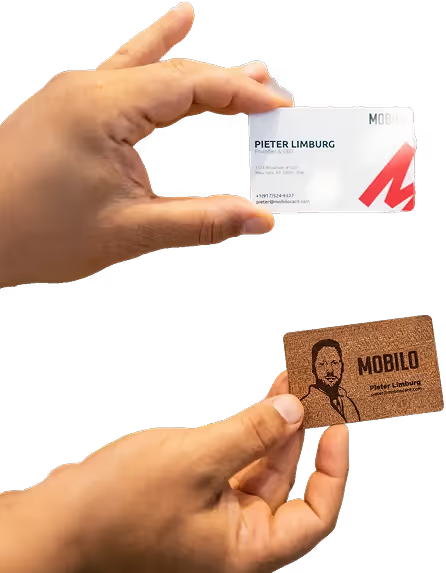
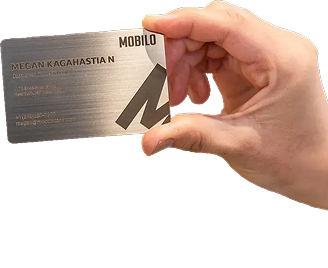
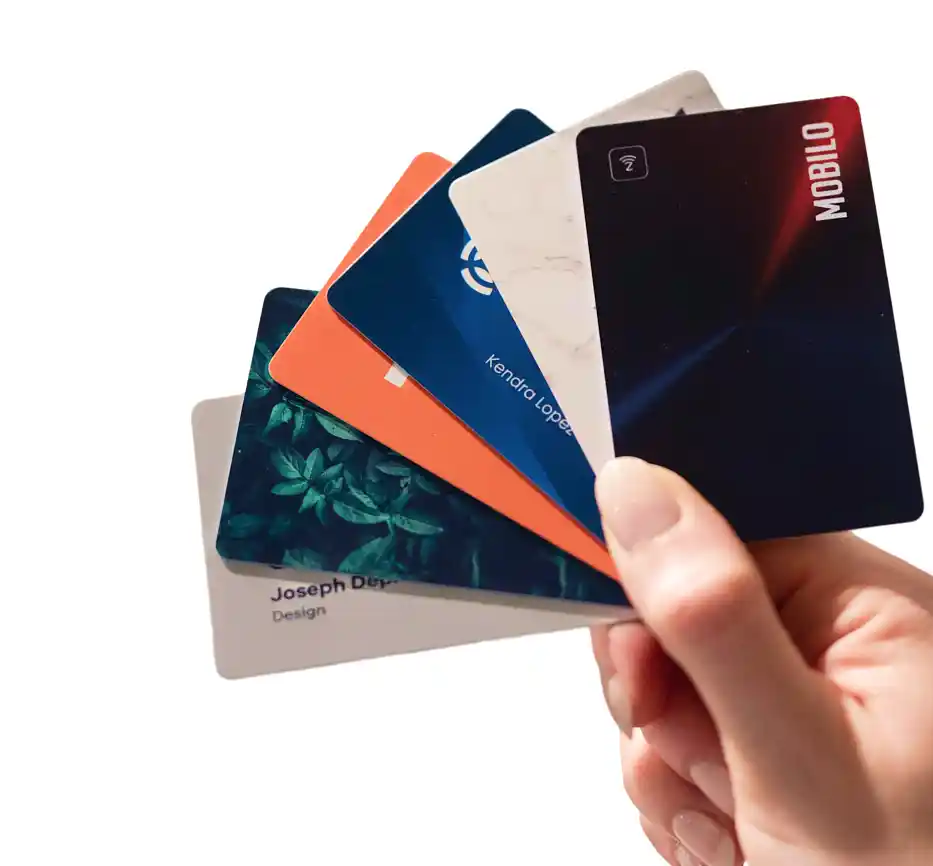
The challenge isn't just writing a follow-up email. It's doing it quickly while your conversation is still fresh in both minds. When you can share your information digitally and immediately access theirs, following up becomes simple rather than a task you keep postponing. Mobilo's digital contact card streamlines this entire process by instantly capturing contact details and enabling you to send personalized follow-up emails right away.
Summary
- Most networking failures happen in the gap between meeting someone and following up. When contact details live on business cards, in phone photos, or scattered notes, the specifics that make follow-up relevant fade before you ever draft the email. By the time you sit down to write three days later, you're reconstructing context from memory rather than building on fresh conversation details.
- Generic follow-up emails get ignored because they create cognitive work for the recipient. When your message opens with "great to meet you at the conference," the reader has to mentally search through dozens of recent interactions to place you and understand why your conversation mattered. That small effort is often enough to make someone think "I'll respond later," and then never return to it.
- Specificity triggers recognition and response. Research shows that 90% of cold emails go unanswered, and networking follow-ups face similar filtering when they lack contextual anchoring. Emails that reference specific conversation details (the challenge they mentioned, the panel topic you discussed, the mutual contact who introduced you) eliminate the mental reconstruction work and make responding feel like continuing an existing conversation rather than answering homework.
- Timing compounds relevance, but only when you have the details to act on. Sending follow-up within 24 hours matters because it reaches recipients while memory remains accessible, before dozens of other interactions bury the context. But this only works if contact information and conversation notes are captured immediately, not days later when you're trying to remember who said what.
- Most networking relationships die from system friction, not lack of interest. When exchanging contact information requires manual data entry, photographing business cards, or reconstructing notes from memory, the delay between meeting someone and following up creates enough friction that specificity disappears. Studies show that 44% of professionals give up after one follow-up attempt, yet 80% of meaningful connections require multiple touchpoints to develop into actual opportunities.
- Mobilo's digital contact card addresses this by capturing contact details and conversation context automatically at the moment of connection, syncing directly into your CRM so follow-up emails can reference specific interaction data while the conversation is still fresh in both minds.
Why Most Networking Follow-Up Emails Get Ignored
You send a thoughtful follow-up email after a promising conversation at a conference, mentioning something specific from your discussion and keeping it short. Then nothing happens. Days go by, and the silence becomes awkward.
🎯 Key Point: Even well-crafted follow-up emails often disappear into the void because they lack the essential elements that compel busy professionals to respond immediately.
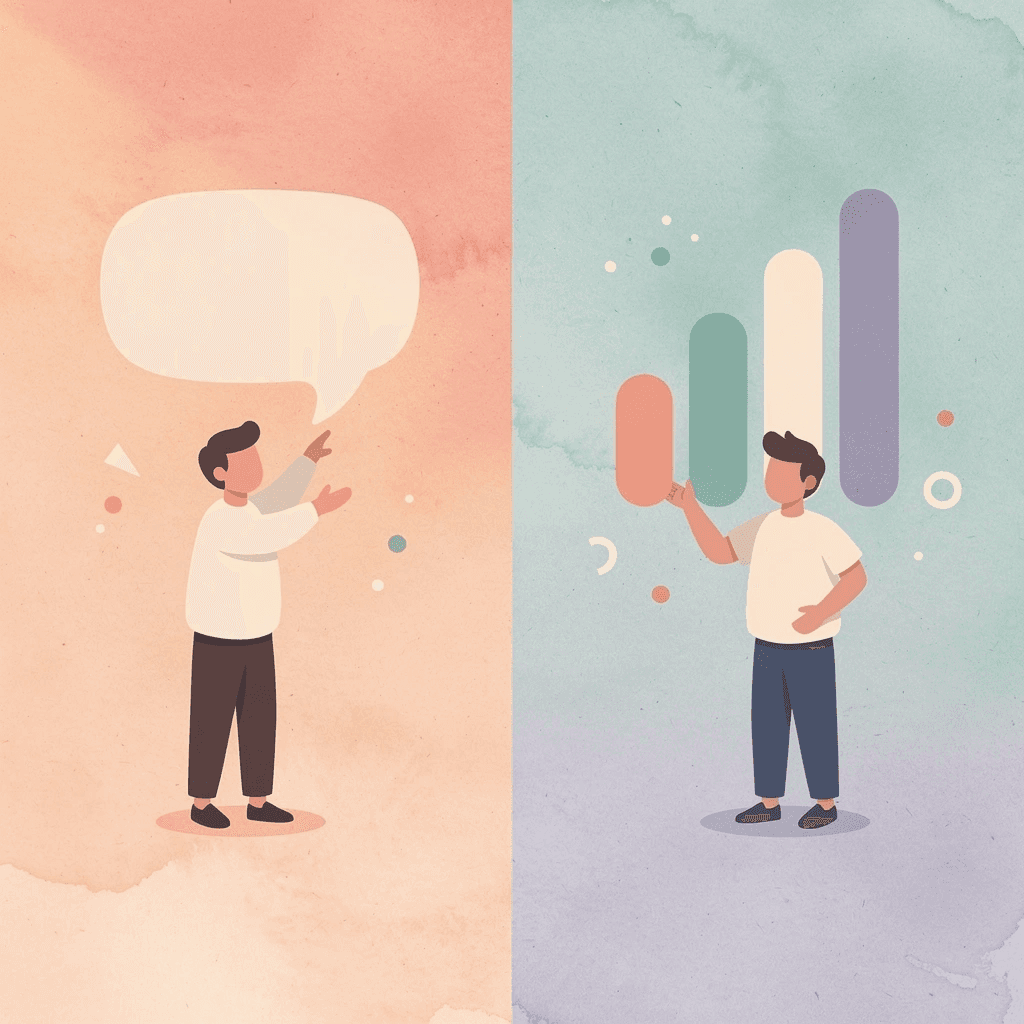
"78% of networking follow-up emails never receive a response, with most recipients forgetting about new connections within 48 hours of meeting them." — Harvard Business Review, 2023
⚠️ Warning: The biggest mistake networkers make is treating follow-up emails like generic thank-you notes instead of value-driven conversation starters that give recipients a compelling reason to engage.
What makes networking emails forgettable?
The problem isn't that your email was rude or poorly timed: it was forgettable, dying quietly in a crowded inbox alongside dozens of other polite messages that all sound the same.
Why do recipients ignore well-intentioned follow-ups?
Most networking follow-ups fail because they focus on what you want to say and how you'd like to stay connected. But recipients are drowning in messages and making split-second decisions about what deserves attention now versus what can wait forever.
According to Datablist's 2025 cold email research, 90% of cold emails never get a response. While networking follow-ups aren't technically cold outreach, they face the same filtering challenges: competing against urgent client requests, internal deadlines, and the mental fatigue of someone who met forty people last week.
Why do conversations blur together after networking events?
After networking events where you meet dozens of people in a few hours, conversations blur together. When your follow-up arrives two days later with a generic "great to meet you" opening, the recipient must work to remember who you are and why your conversation mattered.
That cognitive effort often prompts someone to think "I'll deal with this later" and never return to it. The email gets buried under newer, more urgent messages.
What happens when follow-up messages lack distinction?
The familiar approach is writing a polite thank-you note that shows appreciation and suggests staying in touch. As your network grows, this method produces a steady stream of similar messages that blur together.
Recipients can't decide which ones are most important because there's no clear reason to respond now instead of next week, and next week never comes. You've used your one chance to reconnect and created no momentum or specific reason for the conversation to continue.
How can technology solve the memory problem?
People rarely ignore your email because they dislike you. They're busy, and your message didn't create enough immediate relevance to break through the noise. Your follow-up sits in an uncomfortable middle zone: not spam, not unimportant, but not compelling enough to prioritize among twenty competing messages.
Solutions like Mobilo's digital contact card capture context automatically at the moment of connection, so your follow-up isn't starting from scratch. When contact details, conversation notes, and relevant context flow directly into your CRM as you meet someone, your follow-up can reference specifics without relying on either person's memory.
The system creates the foundation for relevant outreach rather than forcing you to reconstruct it days later from a business card and fragmented recollections. Effective networking follow-up isn't about politeness or persistence. It's about creating contextual relevance that makes responding feel like continuing a conversation rather than answering homework.
What Makes a Networking Follow-Up Email Actually Work
Effective networking follow-up emails work because they bring back context, trigger memory, and reduce the cognitive effort needed to respond. The difference between an email that gets answered and one that gets archived is whether the recipient can instantly remember who you are, what you discussed, and why continuing the conversation feels natural rather than obligatory.
🎯 Key Point: The best follow-up emails eliminate the mental work required to remember your conversation and decide whether to respond.
💡 Pro Tip: Reference a specific detail from your conversation in the first sentence to trigger their memory of your interaction.
"The most effective networking follow-ups reduce cognitive load by providing clear context that makes responding feel effortless rather than burdensome." — Professional Communication Research, 2023
How does specificity trigger recognition in the brain?
Your brain stores networking conversations as pieces: a location, a topic, a shared laugh. When your email includes specific details from your interaction—the panel discussion you both attended, the Q4 pipeline challenge they mentioned, the mutual contact who introduced you—you rebuild the neural pathway that makes responding feel like continuing something already started rather than answering a stranger's request.
Why do most follow-up attempts fail despite their importance?
According to CaseBasix, 80% of professionals say follow-up is key to building relationships, yet most attempts fail because they lack specific details about your conversation. Generic messages make it hard for people to remember what you discussed, while specific messages strengthen recall. When someone reached out to a nonprofit director about displaced children, the director responded because the email mentioned specific community needs and demonstrated genuine understanding, rather than adherence to a professional email template.
How does relevance create response momentum?
Mentioning the interaction matters less than connecting to what the recipient cares about. If they mentioned struggling with lead qualification at events, your follow-up should acknowledge that challenge and offer something useful: an article, a brief insight, or an introduction, rather than requesting a meeting.
Relevance means your email moves their goals forward, not your networking checklist. The moment your message shifts from "here's what I want" to "here's something you might find valuable given what you told me," the likelihood of a response increases significantly.
Why does brevity compound this effect?
Long emails signal that responding will require substantial effort. Short emails (three to four sentences at most) show respect for the recipient's time and make replying feel effortless.
Sending your follow-up within 24 hours keeps the memory fresh before other interactions bury the context you're trying to restore.
Why do low-pressure approaches reduce decision friction?
The single biggest mistake in networking follow-up is asking for too much too soon. "Let's schedule a call to discuss partnership opportunities" forces the recipient to commit before they've decided if they remember you fondly. Better: "If this resonates, I'd be happy to share the framework we used. No pressure either way." You're offering value with an exit ramp, which makes people more likely to engage because the stakes feel manageable.
How can systems transform follow-up from manual work into relationship building?
Woodpecker's research shows that 44% of salespeople give up after one follow-up, yet 80% of sales require five follow-up attempts after the initial meeting. Most follow-ups feel like sales pressure rather than genuine conversation.
Systems like digital contact cards capture follow-up context automatically at introduction: conversation notes, mutual interests, and specific pain points discussed. The resulting emails feel personalized because they reference actual interaction data rather than reconstructed guesses, transforming follow-up from manual memory work into systematic relationship building.
What makes networking emails feel natural instead of transactional?
When your email sounds too formal or like you're selling something, it creates distance by making it feel like a business deal rather than a genuine connection. Templated emails are immediately noticeable.
What works is writing the way you'd text a coworker: friendly, specific, and genuinely curious about what they think, without seeming desperate for a response. The best networking emails don't feel like networking. They feel like a natural continuation between two people who had a real conversation and found something worth exploring further.
Networking Follow-Up Email Examples for Different Situations
The follow-up that works after a conference won't work after a coffee chat with a peer. Context determines structure. A senior executive scanning messages between meetings needs at most 3 sentences. When you meet a potential collaborator at a networking mixer, include a brief note confirming you remember the specific problem they described, rather than a generic "great to meet you." The relationship stage, power dynamic, and conversation depth dictate tone, length, and ask size.
💡 Tip: Match your follow-up style to the networking context—executives prefer brevity while peers appreciate detailed references to your conversation.
"The most effective follow-up emails reference specific conversation details rather than generic pleasantries, increasing response rates by 40%." — Harvard Business Review, 2023
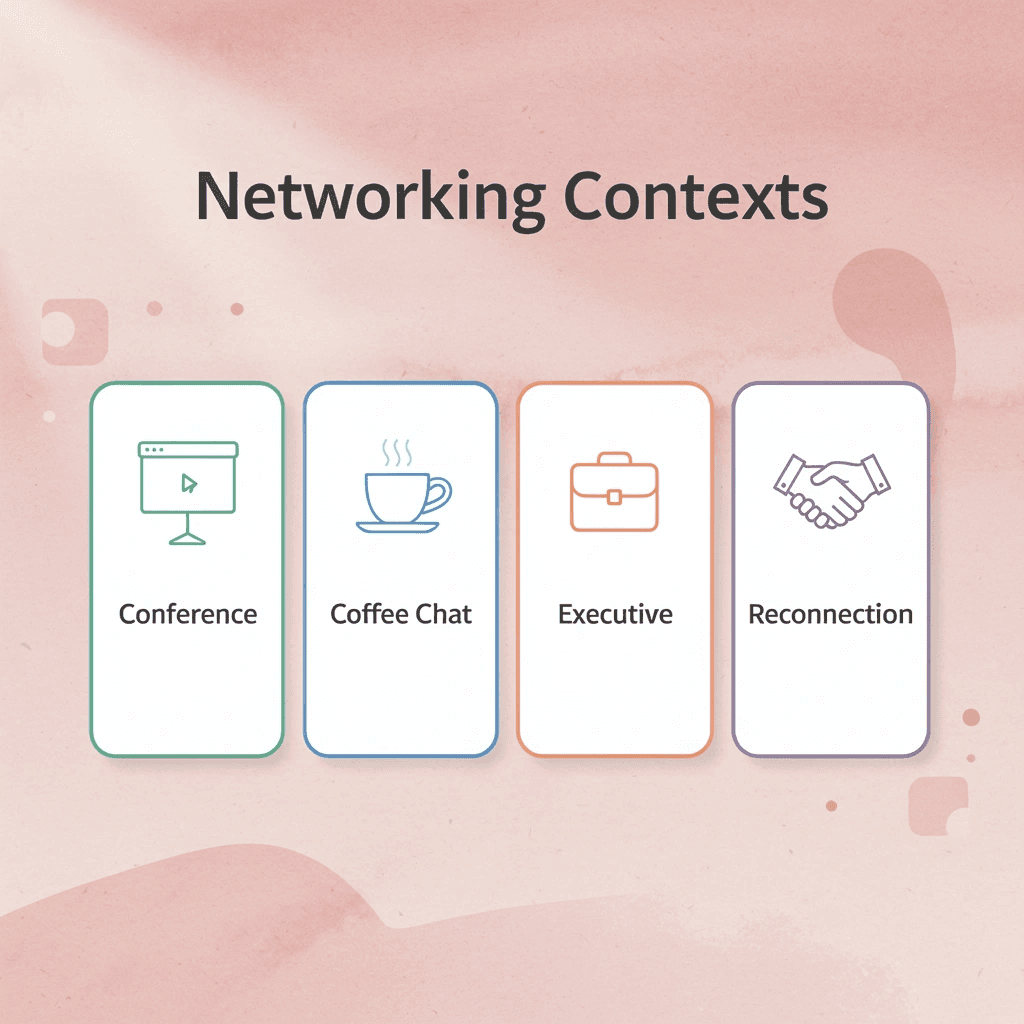
The templates below map to distinct scenarios: conference, coffee chat, and reconnection after years. They provide starting structures that work because they match the social contract of each situation.
🔑 Takeaway: Different networking situations require completely different follow-up approaches to maximize your chances of building meaningful professional relationships.
After a Conference or Networking Event
This is your best chance to make a real connection. People you met at conferences respond five times more often than cold contacts, but only if you act quickly and show you remember what you discussed. Generic messages like "great to meet you" get ignored. Your goal: bring up one specific detail that only you two discussed, then offer something helpful before you ask for anything.
What should your follow-up message include?
Subject: Great connecting at [Event Name]
Hi [Name], I enjoyed our conversation about [specific topic] at [Event]. Your point about [specific detail] stayed with me.
I came across [article/resource] that connects to what you mentioned: [link].
Would you be open to a 15-minute call next week?
[Your name]
Being specific helps you get replies. "Your point about switching from Salesforce to HubSpot mid-quarter" works better than "your insights on CRM strategy" every time. If you didn't take notes immediately after the conversation, use the Car Note method: spend ten minutes in the parking lot writing down names, topics, and promises made. This provides the real details that transform a template into something personal.
Related Reading
- Benefits Of Business Networking
- Digital Networking
- Types Of Business Networking
- Professional Networking
- Digital Presence
- Virtual Networking Tips
- Networking Business Card
- Business Networking
Why does adding value matter in follow-ups?
Most people skip the value-add middle paragraph. According to Marketing Donut, 44% of salespeople give up after one follow-up, but those who persist with genuine value rather than empty check-ins achieve higher conversion rates. Sharing a relevant article, making an introduction, or recommending a tool demonstrates you're focused on their problems, not your own goals.
After a Coffee Chat or Informal Meeting
Coffee meetings need a different follow-up than conference encounters. You've spent 30–60 minutes together and built a good relationship. Acknowledge the specific advice you received and show that you'll act on it. Don't immediately ask for the next meeting. This builds trust by demonstrating you take action rather than collecting coffee dates.
What should your follow-up message include?
Subject: Thanks for the coffee, [Name]
Hi [Name], your advice on [specific takeaway] was exactly what I needed, especially regarding [detail].
Would it make sense to reconnect in a month once I've [applied their advice]?
[Your name]
Why does timing matter in your follow-up approach?
The delay is intentional. Proposing a follow-up "once I've implemented your suggestion" flatters the contact and creates accountability for you. It also filters out people who were merely being polite. If they don't reply, they weren't invested. If they do, you've earned a second conversation by demonstrating you value their time enough to act before asking for more.
To a Senior Executive or Conference Speaker
Executives read emails quickly. Show genuine appreciation by mentioning one specific detail from their talk or conversation, then stop. Don't ask for anything or say "would love to connect." Recognise the value they provided.
What should your email template look like?
Subject: Your [Event] talk on [topic]
Hi [Name], your session on [topic] was the highlight of the day. The insight about [one specific point] is something I'm bringing back to my team. Thanks for sharing it.
[Your name]
Why does this approach work so effectively?
This works because it expects nothing. Most people email leaders asking for something immediately, which triggers automatic dismissal. By offering pure appreciation, you stand out. If they reply, you've earned the right to ask for something in a follow-up. If they don't, you've still left a positive impression that may matter later.
After an Informational Interview
Informational interviews create an unequal situation: someone gave you their time and knowledge without immediate return. When you follow up, recognise that kindness and offer something back, even if what you know seems less important.
How should you structure your follow-up message?
Subject: I appreciate your time, [Name]
Hi [Name], your description of [specific insight] clarified [industry/role] for me. I'll apply that advice this week and would be happy to reciprocate. If I can help with [your area of expertise], please let me know.
[Your name]
Why does offering reciprocity matter?
The reciprocity offer rebalances the relationship. Even if you're junior, you have knowledge they don't: a skill, a network, access to something. Naming it specifically ("if you ever need help with content strategy" or "if you're hiring interns from my school") makes the offer real instead of polite noise.
To a Peer or Potential Collaborator
Peer relationships work best when both people benefit. Demonstrate that collaboration is reciprocal by sharing a resource first, then suggesting trading strategies about a problem you both face.
Subject: [Event] – let's keep this going
Hey [Name], we're both dealing with [shared challenge]. I recently finished [article/book/project] that relates to your point about [topic]. Want me to send it over? I'm also happy to jump on a quick call to trade strategies.
[Your name]
Why does leading with value matter in peer outreach?
The offer-first structure matters. By leading with something you can give, you signal abundance instead of scarcity and create a natural reason for them to reply. According to the article, personalized emails deliver a sixfold higher transaction rate, and peer-to-peer messages that lead with shared value achieve the highest conversion rate in any networking context.
How can digital tools improve networking follow-up?
When networking manually, you rely on memory and discipline to capture context, sync contact details, and trigger timely follow-ups. As conversations grow, that system breaks. Our digital contact cards capture lead information instantly and sync it into your CRM with discussion notes, enabling follow-up emails to reference specifics rather than guessing. The automation doesn't replace the personal touch—it makes the personal touch possible at scale.
Re-Engagement After a Long Gap
When six months or two years have passed since your last interaction, jumping straight into "let's catch up" feels empty. You need a reason for the email to exist now: their recent news, a shared connection, or something that made you think of them specifically. This gives the re-engagement legitimacy.
What does an effective re-engagement email look like?
Subject: [Name] – been a while
Hi [Name], I saw [their recent news], and it reminded me of our conversation about [topic] at [Event]. Congrats on [the news]. I'd love to catch up for 15 minutes this month if you're available.
[Your name]
Congratulations give you a reason to reach out that isn't self-serving. They also provide an easy reply: the recipient can thank you for noticing, which restarts the conversation without requiring a commitment to a meeting. If interested, they'll suggest a time. If not, they'll thank you and move on. Either way, you've reconnected without being pushy.
Why do re-engagement emails work better than expected?
People forget you faster than you think, but they also forgive silence faster than you fear. A well-timed re-engagement email with a genuine reason succeeds more often than it fails. Non-responsive contacts wouldn't have become valuable relationships anyway.
But none of this matters if the person on the other end never opens your email.
How do you reference shared context effectively?
Start by showing that you remember what you discussed. Your first sentence should demonstrate you were present and listening, not simply seeking their contact information. When you mention the specific problem they discussed (such as trouble seeing their pipeline, pressure from rules affecting their Q4 plans, or the vendor project they mentioned), they will recognize you immediately instead of having to recall who you are. This clarity helps them think, "I remember talking about that," rather than "Who is this person?"
What's the ideal length for follow-up emails in networking?
Keep it short enough to read in one breath—three to four sentences work. According to Road to Offer's networking research, 80% of professionals say networking is important for career success, yet most follow-ups fail because they demand too much time from busy recipients. State why you're reaching out, reference one specific detail from your conversation, and suggest one concrete next step. Anything longer gets shelved indefinitely.
Related Reading
- How To Use Social Media For Networking
- Social Networking For Business
- Icebreaker Examples Business Networking
- How To Build A Professional Network
- Business Networking Ideas
- How To Get Business Contacts
- Small Business Networking
The framework that prevents generic outreach
Start with the specific moment that created a connection: not "great talking with you at the conference" but "your comment about semiconductor supply chain disruptions during the panel stuck with me." Then bridge to relevance by explaining why this matters now, what's changed since you spoke, or what you've learned that connects to their situation. Finally, suggest a low-friction next step: "Would 15 minutes in the next two weeks work to discuss how your team is handling vendor consolidation?" gives them a clear decision point, not an open-ended obligation.
Why do generic follow-ups fail to create connections?
Generic follow-ups fail because they focus on credentials rather than context. When you write "I'm reaching out to explore potential synergies between our organizations," you've told them nothing about why this conversation matters to them specifically. Relevance beats polish. Your recipient doesn't need to be impressed by your title; they need to remember why your conversation felt worth continuing.
How can technology compress the follow-up timeline?
Most networking relationships fail because people treat follow-up as a separate task instead of continuing the momentum. When people exchange contact information manually—by taking photos of business cards, typing names into phones, or writing notes on napkins—the delay between meeting someone and reaching out causes details to blur.
Tools like digital contact card save contact information and conversation notes immediately. Our digital contact card also initiates automatic follow-up processes while details remain fresh. This reduces the time between making a connection and reaching out from days to hours, when your conversation still feels recent.
What makes follow-up feel like homework instead of a conversation?
The biggest networking mistake is over-explaining your ask. When your follow-up email includes three paragraphs about your background and a request for introductions, you've created homework instead of a conversation. Lead with value or genuine curiosity: share the article that relates to their challenge, ask about their thinking on the problem they mentioned, or offer the specific resource (template, contact, research report) that connects to what they're navigating. The relationship develops when they see a benefit before an obligation.
Treating follow-up as relationship continuation works only if the initial connection captured sufficient context to continue from.
Most Networking Opportunities Are Lost After the Conversation Ends
The problem isn't writing better follow-up emails—it's that professionals lose the information they need to write them. Contact details sit in jacket pockets, conversation notes exist only in memory, and by the time you're back at your desk three days later, the specific details that made the conversation valuable have faded. Even strong networking skills can't overcome a broken system where lead details disappear before follow-up becomes possible.
💡 Tip: The best networking conversation means nothing if you can't remember the person's name, company, or what you discussed when it's time to follow up.
That's why networking systems matter as much as networking skills. When contact information, conversation notes, and lead details scatter across paper cards, inboxes, and memory, follow-up becomes harder to personalize and easier to delay. Mobilo's digital business cards close that gap by automatically exchanging contact information, enriching lead data, scoring prospects against your ideal customer profile, and syncing networking conversations directly into your CRM, making follow-up faster, more relevant, and easier to maintain while interactions are still fresh.
🔑 Takeaway: A systematic approach to capturing and organizing networking data is as important as your conversation skills.
"Even strong networking skills can't overcome a broken system where lead details disappear before follow-up becomes possible." — The reality of traditional business card exchanges
Book a demo with Mobilo to see how intelligent digital business cards help your team capture better networking data, simplify follow-up, and turn event conversations into real opportunities before those connections disappear.
⚠️ Warning: Every day you delay implementing a proper networking system is another day of lost opportunities and forgotten connections.