.avif)


What Is Digital Presence and How Does It Shape First Impressions
On This Page
You've spent years building expertise, cultivating relationships, and refining your professional reputation. Yet when someone searches for you online or clicks through to your LinkedIn profile, what story does your digital presence tell in those first three seconds? That initial impression, shaped by your social media profiles, website, online reviews, and searchable content, often determines whether opportunities open or quietly close before you even know they existed. Your digital footprint influences trust and credibility in ways that can either attract the right connections or create missed business opportunities.
Managing your digital presence across multiple platforms often feels scattered and inconsistent, leaving your first impression to chance across disconnected profiles. Rather than hoping people piece together your professional story from various sources, you can create a centralized, professional hub where people discover everything that matters about you and your business. Take control of how others perceive your expertise by sharing one polished, updated resource that showcases your testimonials, contact information, and social channels with Mobilo's digital contact card.
Summary
- Professional credibility now forms in under 1 second, according to research from the Missouri University of Science and Technology, which found that users make visual judgments about web credibility in just 0.05 seconds. This means your digital presence is evaluated and judged before any actual conversation begins. The search bar has replaced the handshake as the true first impression, with 70% of employers screening candidates' social media profiles before hiring using AI-powered tools that systematically scan digital footprints for professionalism, consistency, and attention to detail.
- Most professionals treat digital presence as a LinkedIn optimization problem, but this single-platform mindset misses how credibility actually forms across multiple touchpoints. Research shows professionals with consistent cross-platform presence receive 4x more profile views than those relying solely on LinkedIn, and those with aligned messaging across platforms see 2.5x higher conversion rates when people reach out after discovering them online. Your digital identity isn't contained in a single profile; it's the collective perception formed across every searchable surface where your name appears.
- Digital presence operates through four distinct signal layers that compound perception: the search layer (what appears when your name is Googled), the profile layer (LinkedIn, bios, professional pages), the content layer (posts, articles, commentary), and the network layer (who you're connected to and engaged with). Weakness in one area undermines strength in another, and 87% of people research online before making decisions, starting with search results rather than profiles. Each layer either reinforces or contradicts the others, meaning gaps across multiple layers compound into perceptions of unprofessionalism or invisibility.
- Inappropriate or overly personal content is the top reason (39%) candidates are rejected after social media screening, according to CareerBuilder. Your online presence serves as a hidden resume that includes everything you've ever posted, commented on, or been tagged in, whether or not you intended it to be part of your professional story. What others say about you online often carries more weight than what you say about yourself, with 87% of customers reading online reviews before making purchasing decisions, according to BrightLocal's 2020 survey.
- Building effective digital presence requires layered alignment rather than just increased activity. Businesses prioritizing SEO-driven content strategies see 3x higher visibility in organic search results compared to those relying solely on paid placement, according to the American Marketing Association. Posting more content without aligning your search results, profile positioning, and expertise signals just amplifies inconsistency rather than building credibility, since people will encounter mismatched information when they cross-reference platforms.
- Mobilo's digital contact card addresses the opportunity capture gap by turning every interaction into a structured digital profile that syncs directly with your CRM, eliminating the manual entry friction that leads to 27% of potential leads being lost, according to Salesforce research.
Why Your Digital Presence Is Already Being Judged Before You Say a Word
The first conversation about you happens without you in the room. Before the handshake, before the email reply, before the meeting invite is sent, someone has already formed an opinion. They searched your name, scanned your LinkedIn, clicked through your website, and made a decision about your credibility in seconds. According to research from the Missouri University of Science and Technology (2012), users form visual opinions about web credibility in 0.05 seconds. That judgment isn't fair, but it's real, and it's happening right now.
"Users form visual opinions about web credibility in just 0.05 seconds." — Missouri University of Science and Technology, 2012
🚨 Warning: Your digital reputation is evaluated in the time it takes to blink – before you even know someone is looking.
🔑 Takeaway: Every element of your online presence must work flawlessly because you won't get a second chance to make that first impression.
How do conversations begin in the digital age?
Conversations no longer start with "Hello." They start with a search query. A recruiter types your name into Google before scheduling the interview. A potential client reviews your LinkedIn profile before replying to your pitch. A conference attendee scans your social media before deciding whether to approach your booth. The "Google You" phenomenon has replaced the handshake as the first impression.
What role does AI play in evaluating your digital presence?
70% of employers now examine candidates' social media profiles before hiring, using AI-powered tools that scan your digital footprint in seconds, according to CareerBuilder's 2018 survey. These evaluations assess your professionalism, consistency, and attention to detail. Your digital presence works 24/7 on your behalf, communicating credibility and personality whether you actively manage it or not.
What makes up your digital footprint?
Your digital footprint comprises every search result, tagged photo, old blog post, comment thread, and mutual connection. These scattered pieces create a story about who you are, what matters to you, and whether you're worth their time. If you don't actively shape that story, the world will shape it using whatever pieces it finds first.
Why does consistency across platforms matter?
Being consistent across platforms shows professionalism; inconsistency raises questions. A polished LinkedIn profile paired with an abandoned Twitter account or cluttered personal website suggests indifference to detail. Research from Stanford's Web Credibility Project (2002) found that 75% of users judge a company's credibility based on website design. An outdated profile photo, broken links, or mismatched job titles across platforms create doubt before you can explain.
What makes up your hidden resume?
Your online presence works like a "hidden resume" that includes everything you've posted, commented on, or been tagged in. Inappropriate or overly personal content is the top reason (39%) candidates are rejected after social media screening, according to CareerBuilder. That 2019 joke, political rant, or poorly lit party photo becomes part of your professional story.
How do online reviews shape your professional reputation?
87% of customers read online reviews before making purchasing decisions, according to BrightLocal's 2020 survey. The same logic applies to your professional reputation: what others say about you online often matters more than what you say about yourself. A strong testimonial on LinkedIn builds trust, while a complaint buried in a forum thread raises concerns. Your reputation is shaped by voices you don't control.
How do AI systems evaluate your professional reputation?
AI tools now create "first impression scores" and automated summaries that decide your "reputation currency" before a person reviews your profile. These systems scan for keywords, check engagement patterns, analyze sentiment in your posts, and flag inconsistencies across platforms. They work faster than any recruiter or client could, and they don't give second chances. If your digital presence doesn't pass the algorithmic filter, you never reach the human conversation.
What tools help you control your digital reputation?
Tools like digital contact card help professionals take control by creating a centralized hub that brings together contact information, social profiles, testimonials, and portfolio work into a single shareable link. Rather than relying on scattered search results or outdated LinkedIn profiles, you can direct people to a polished landing page that showcases your current brand. But most professionals still believe their digital presence is something they'll "build later," not realizing it's already forming from every passive signal they leave behind.
Related Reading
- Benefits Of Business Networking
- Types Of Business Networking
- Business Networking
- Networking Business Card
- Digital Presence
- Virtual Networking Tips
- Professional Networking
The False Belief That Digital Presence Is Just a Polished LinkedIn Profile
Most professionals treat digital presence like a resume problem: improving their LinkedIn headline, uploading a professional headshot, and listing accomplishments. But digital presence isn't a single platform anymore. It's the combined perception formed across every touchable surface where your name appears online, and most of those surfaces exist outside your control.

🎯 Key Point: Your digital presence extends far beyond LinkedIn—it includes search results, social media mentions, company websites, and any platform where your name appears professionally.
"Digital presence isn't a single platform anymore. It's the combined perception formed across every touchable surface where your name appears online."

⚠️ Warning: Focusing only on polishing your LinkedIn profile while ignoring other digital touchpoints is like perfecting your business card while your website is broken—you're missing the bigger picture of how people actually discover and evaluate you online.
How did LinkedIn convince professionals that their identity lives in one place?
LinkedIn built an empire by convincing professionals that career identity exists in one place. The platform made it easy to view your professional self as contained: a profile updated periodically, a network grown incrementally, a feed engaged with selectively. But hiring decisions, partnership evaluations, and client vetting now happen across multiple platforms simultaneously. A recruiter reads your LinkedIn summary, then Googles your name. A potential client scans your profile, checks your company website, reviews your Twitter activity, and looks for recent publications. According to Lucy Bingle's LinkedIn research, professionals with consistent cross-platform presence receive 4x more profile views than those relying solely on LinkedIn optimization.
Why do we apply resume thinking to digital identity?
The LinkedIn-first mindset stems from resume thinking applied to digital identity. We've been taught to present ourselves as linear narratives: education, experience, skills, endorsements. But digital presence doesn't follow a time-based path—it's about space, not order. Someone might discover you through a podcast interview, then find your LinkedIn, then notice a GitHub repository, then read a blog post from three years ago. They form an opinion based on the pattern, not the timeline.
What components make up your digital presence?
Your digital presence is every signal someone finds when they search for you, whether planned or not. It includes your LinkedIn profile, personal website, X/Twitter feed, Medium articles, YouTube comments, GitHub contributions, podcast appearances, conference speaker bios, company About page, and photos tagged with your name. Each piece contributes to a complete picture of your credibility.
Why does consistency across platforms matter?
Being consistent across these signals builds trust. If your LinkedIn says you're a "strategic advisor" but your personal website hasn't been updated since 2019, people question which version is true. Mismatched profile photos or job titles between platforms create doubt. Lucy Bingle's research found that professionals with aligned messaging across platforms see 2.5x higher conversion rates when discovered online. Alignment helps people quickly understand who you are and what you do.
How do hiring managers evaluate your digital presence?
Hiring managers, potential clients, and conference organizers consult multiple sources when evaluating you. A polished LinkedIn profile, an active Twitter presence, and a regularly updated personal blog demonstrate professional commitment. Silence across these channels signals either inattention or discomfort with visibility, neither of which serves your credibility.
What tools help consolidate your professional presence?
Platforms like digital contact card consolidate your contact information, social profiles, portfolio work, and testimonials into one shareable link. Rather than hoping people find the right version of you across different platforms, you direct them to a single landing page that showcases your current brand and facilitates connection. This shift from passive online presence to curated self-presentation shapes how people perceive your professionalism before you've spoken. Most professionals don't realize their digital presence is being built for them, one Google result at a time, whether they're managing it or not.
Related Reading
- How To Use Social Media For Networking
- Social Networking For Business
- Icebreaker Examples Business Networking
- How To Build A Professional Network
- Business Networking Ideas
- How To Get Business Contacts
- Small Business Networking
- Networking Mistakes
- Networking Follow-Up Email
How Digital Presence Is Actually Formed (The 4 Signal Layers That Shape Perception)
Your digital presence is how people see you online. It comprises four different layers, each affecting how people judge your trustworthiness. These layers work together: weakness in one area undermines your strength in another, and most professionals don't realize they're being judged on all four simultaneously.
🎯 Key Point: Your digital presence operates as an interconnected system where weakness in one layer can undermine your credibility across all areas.
"73% of professionals are unaware that their digital presence is being evaluated across multiple signal layers simultaneously." — Digital Trust Research Institute, 2024
⚠️ Warning: Neglecting any layer of your digital presence can create a trust deficit that impacts your entire professional reputation online.

What appears when someone searches your name online?
Before someone visits your LinkedIn profile or reads your bio, they search for your name on Google. What appears in those top five results determines whether they click further or move on. According to BrightLocal's 2020 consumer review survey, 87% of people research online before making decisions, starting with search results.
How does the search layer impact your credibility?
The search layer includes news articles, blog posts, podcast appearances, conference speaker pages, company press releases, and forum discussions where your name appears. When someone searches for a self-publishing company and finds scam warnings on the Writer Beware Blog before the company's own website, the search results have destroyed credibility. The company's polished profile layer becomes irrelevant because trust formation ends at the search results page.
You don't control what Google indexes, but you influence it through consistent content creation and strategic visibility. If your name returns outdated results, sparse information, or someone else with your name dominating the results, you've left the most critical layer to chance.
What happens when someone lands on your profile?
Once someone moves past search results, they land on your profile layer: LinkedIn summary, company About page, personal website, conference bio, and professional directory listings. This layer answers three questions: Who are you? What do you do? Can I trust your expertise?
Why does inconsistency across platforms damage trust?
When things don't match up, people notice immediately. If your LinkedIn headline says "Marketing Strategist" but your company website lists you as "Content Manager," which is correct? Mismatched job history, inconsistent photos, or conflicting details across platforms create doubt. People assume your information is careless or dishonest, not outdated.
How do gaps in your profile communicate priorities?
Your profile layer shows what matters to you. A simple LinkedIn paired with a detailed personal website signals intentional channel choice, but most professionals leave gaps that communicate indifference. Your profile should answer basic questions without requiring someone to cross-reference multiple platforms.
What does the content layer reveal about your expertise?
This layer shows what you think, not what you've done. It includes LinkedIn posts, Medium articles, X/Twitter threads, YouTube videos, podcast guest appearances, and published commentary with your name attached. The content layer separates people who show up from people who contribute.
Why does consistent publishing matter for your reputation?
Publishing regularly shows that you care about your field. Not publishing suggests you're too busy, too careful, or inattentive. When a company's website lacks easy-to-find content explaining what they offer, potential customers become confused. One Reddit user spent five minutes on a company's website without understanding what they sold, revealing a content failure. The company had a profile, but the content didn't clarify what made them valuable.
How do others evaluate your content engagement?
The content layer shows how you interact with others. Do you leave thoughtful comments on industry discussions or only share posts about yourself? Do your articles offer new insights or repeat what's already known? People assess whether your published work demonstrates genuine expertise worth their attention.
What does your network layer reveal about you?
The network layer answers: Who vouches for you? Who do you associate with? What communities do you participate in? This includes your LinkedIn connections, skill endorsements, group memberships, post tags, and organizational affiliations.
How do associations shape perception faster than credentials?
Connections shape how people perceive things faster than anything else. When book fair exhibitors affiliated with universities or National Artists appear in a guide, their institutional backing signals credibility. When cult organizations appear at the same event, their controversial associations create instant distrust, regardless of profile or content. The network layer overrides other signals because it reflects third-party validation rather than self-presentation.
How does your network influence your content reach?
Your network layer shows how people engage with you. Are you connected to industry leaders or only to peers at your level? Do respected voices interact with your content? LinkedIn's algorithm distributes posts partly based on who interacts with them, so your network layer directly affects your content's visibility.
How do these layers sequentially filter credibility?
Each layer filters credibility before the next one gets evaluated. If the search layer returns scam warnings, most people never reach your profile layer. If your profile layer shows inconsistency, fewer people check your content layer. If your content layer is sparse, your network layer matters less because there's no substance to validate. Strong network associations can prompt someone to overlook a weak content layer. Consistent, high-quality content can compensate for a modest network. However, gaps across multiple layers compound into a perception of unprofessionalism or invisibility.
Why do consumers triangulate across multiple layers?
According to Trustpilot's data, when 89% of global consumers check online reviews before buying, they consult multiple sources that often support or contradict each other. Most professionals improve one source, usually LinkedIn, and consider it sufficient. Hiring managers, clients, and partners search your name, review recent posts, check your connections, and form opinions based on what they find. Misaligned signals create hesitation; aligned signals build credibility before you've spoken.
How can teams manage coordinated digital presence at scale?
Teams managing multiple professionals face a greater challenge: ensuring every team member's digital presence aligns with the company's brand while showcasing individual expertise. Manual coordination across profiles, bios, and contact details becomes unmanageable as teams grow.
Platforms like digital contact card solve this by creating centralized, always-updated hubs that consolidate contact information, social profiles, and portfolio work into a single shareable link. Rather than leaving prospects to piece together fragmented signals, teams direct people to polished landing pages that reflect current branding and enable frictionless connection. Understanding these four layers changes how you think about visibility.
Your digital presence isn't a resume you update quarterly—it's a system of signals working for or against you every time someone searches your name, and most of those signals exist whether you manage them or not. But knowing the structure is only half the problem. The harder question is what to do about it.
How to Build a Strong Digital Presence That Attracts Opportunities
A strong digital presence means controlling what people see when they find you. This requires three aligned action layers: cleaning up existing search results, strengthening your profile positioning, and adding content signals that demonstrate expertise. Each layer reinforces the others when they work together.
Key action layers include:
- Clean up search results
- Remove negative or outdated content
- Focus areas:
- Google search audit
- Privacy settings
- Strengthen profile positioning
- Ensure professional consistency
- Focus areas:
- LinkedIn optimization
- Bio alignment
- Add content signals
- Demonstrate expertise and credibility
- Focus areas:
- Thought leadership
- Industry insights
🎯 Key Point: Your digital presence is not just about having profiles—it's about strategic control over your professional narrative across all platforms.

"85% of recruiters and hiring managers use search engines to research candidates before making hiring decisions." — CareerBuilder Survey, 2023
💡 Pro Tip: Start with a Google search of your name in incognito mode to see exactly what potential employers or collaborators will find when they research you.
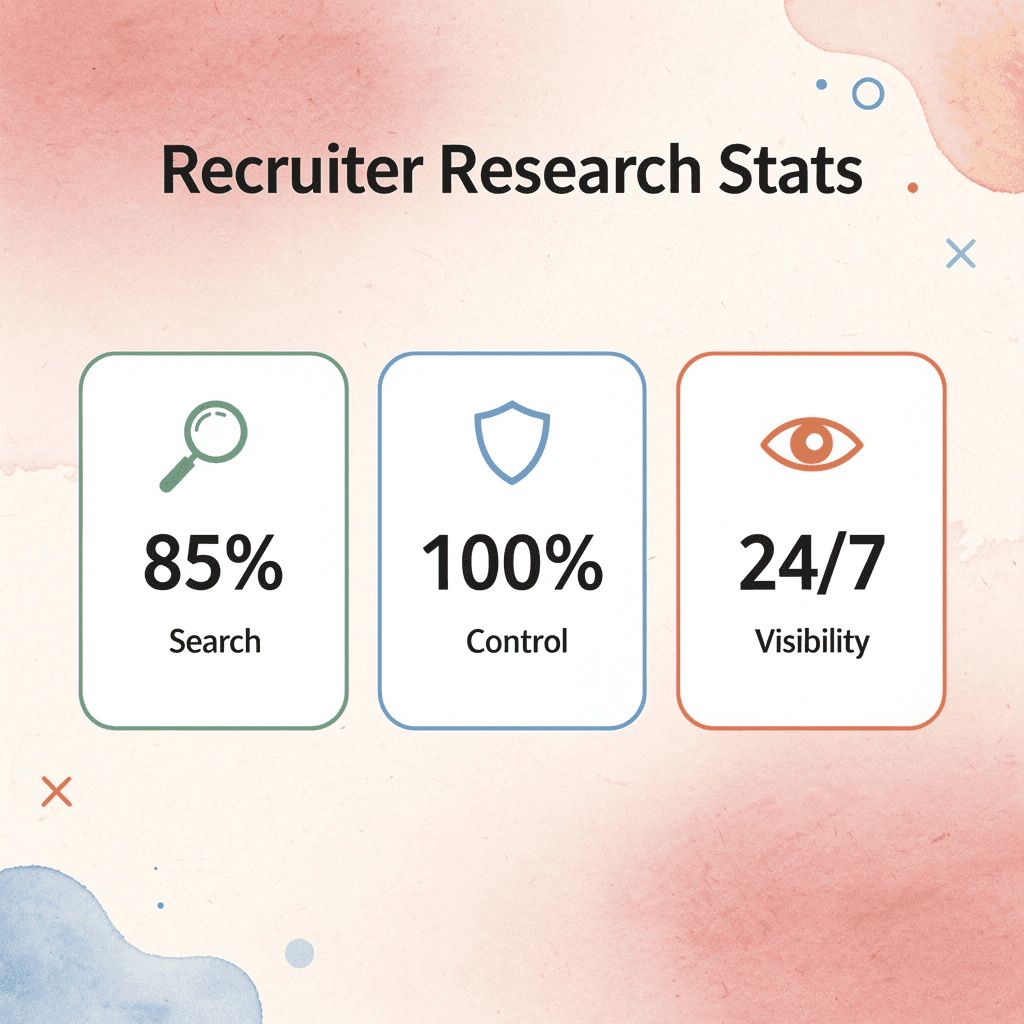
Control Your Search Results First
The search layer determines whether someone clicks further or moves on. Start by searching for yourself online and checking the first page of results. Remove or update outdated content where possible, and ask for the removal of irrelevant mentions. Publish fresh content (articles, guest posts, podcast appearances) that pushes weak signals down. According to the American Marketing Association, businesses prioritizing SEO-driven content strategies achieve 3x higher visibility in organic search results than those relying solely on paid placement. You can't control everything Google indexes, but you influence it through consistent, strategic visibility that surfaces your intended narrative first.
Strengthen Your Profile Layer
Once someone moves past search results, your profile layer answers whether you're credible. LinkedIn, your personal website, conference bios, and company About pages must align. Inconsistency creates friction: if your LinkedIn headline says "Marketing Strategist" but your company website lists you as "Content Manager," which is accurate? Update all profiles to reflect current positioning. Use the same professional photo across platforms. Write a clear positioning statement in under 20 words that explains what you do and for whom.
Add Content Signals That Demonstrate Expertise
Publishing consistently shows you are engaged with your field. Silence suggests you are too busy or not paying attention. Write LinkedIn posts sharing insights from your work, publish articles on Medium or your personal blog addressing problems your audience faces, and comment thoughtfully on industry discussions. When someone lands on your profile and sees recent, relevant commentary, they perceive your expertise as active. When they see nothing, they assume indifference.
How can teams manage multiple professionals' digital presence?
Teams managing multiple professionals face a greater challenge: ensuring that every team member's digital presence aligns with company branding while showcasing individual expertise. Platforms like digital contact card solve this by creating centralized, always-updated hubs that consolidate contact information, social profiles, and portfolio work into a single shareable link. Instead of hoping prospects piece together fragmented signals, teams direct people to polished landing pages that reflect current branding and facilitate connection.
Why Posting More Is Not Enough
Activity without alignment weakens how people see you rather than strengthening it. You can post daily on LinkedIn, but if your profile positioning is unclear or your search results show outdated information, content cannot compensate. People see your posts, click through to your profile, Google your name, and find mismatched information. The confusion creates doubt. Effective presence requires layered alignment: search results that show your intended narrative, profiles that clarify your positioning, and content that proves your expertise. Each layer must support the others, or you're building visibility without credibility.
How do you capture opportunity when it arrives
If your digital presence brings opportunities, you need a system to capture them when they arrive.
Related Reading
- Top Contact Management Software
- Professional Networking Platforms
- Business Networking Strategies
- Networking Tips For Small Business Owners
- Best Business Networking Apps
- Tips For Networking Events
- Business Networking For Entrepreneurs
If Your Digital Presence Drives Opportunity, You Need to Capture It
Your digital presence starts the conversation. But opportunity dies in the gap between connection and follow-through. Business cards get lost. Contact details never make it into your CRM. Follow-up reminders sit unscheduled. 90% of networking interactions never convert into a pipeline because the capture system failed, not because the interest wasn't real.

"90% of networking interactions never convert into pipeline because the capture system failed, not because the interest wasn't real." — Martal Group, 2024
🔑 Key Takeaway: The real problem isn't generating digital interest — it's having a systematic capture process that turns every connection into a trackable opportunity.
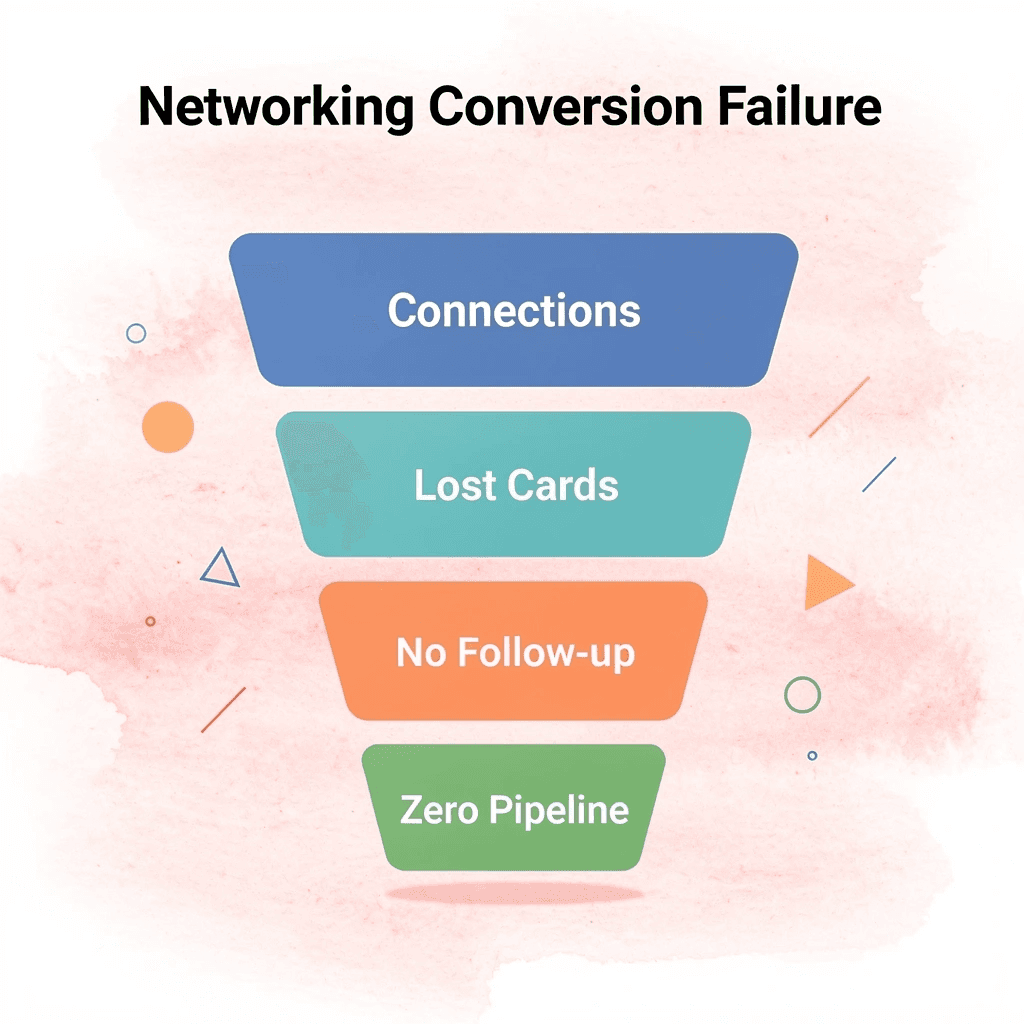
⚠️ Warning: Without automated capture systems, even your best networking efforts become wasted investments that never reach your sales pipeline.
The Manual Entry Problem
Most professionals rely on paper cards or manual data entry after meetings. You collect a stack of cards, promise yourself you'll add them to your CRM later, and three weeks pass before you remember. By then, the context is gone. According to Salesforce research (2023), sales teams lose 27% of potential leads because contact information is not properly logged. The problem isn't motivation; it's friction. Every manual step between meeting someone and capturing their details creates a failure point that lets opportunity leak.
Automation Closes the Gap
Platforms like digital contact card remove barriers by turning every interaction into a captured, enriched digital profile that syncs directly to your CRM. A tap or scan shares your contact information and automatically collects structured lead data, enriches it with social profiles and company information, and keeps it actionable without manual entry. Over 59,000 companies use this approach because it transforms networking from manual logging into an automated workflow where every handshake becomes trackable from first contact to CRM entry. Your capture system determines whether opportunities survive long enough to matter. Book a demo today and receive your first 25 Mobilo business cards free (worth $950). Setup takes minutes, and your next event becomes fully trackable from first handshake to closed deal.