.avif)


How to Use Social Media for Networking and Real Connections
On This Page
Collecting LinkedIn connections and following industry leaders rarely translates into real professional opportunities. Learning how to use social media for networking requires moving beyond passive scrolling to building genuine relationships that lead to collaborations, partnerships, and career advancement. The key lies in transforming online interactions into meaningful connections through strategic engagement and consistent follow-up.
Success depends on making every digital interaction count, from the first LinkedIn message to ongoing relationship maintenance. Professional networking becomes more effective when contacts can easily access and save your information across all platforms. Mobilo's digital contact card streamlines this process, ensuring that promising online conversations develop into lasting professional relationships.
Summary
- Most social media networking fails because platforms optimize for visibility metrics while real opportunities require depth and trust. Nearly half of adults report experiencing loneliness despite unprecedented digital connectivity, according to Stevenson University. The gap between being visible to thousands and being truly known by anyone creates professional isolation. You can accumulate followers and engagement without building a single relationship strong enough to generate referrals, introductions, or collaboration.
- Research on human social capacity suggests we can maintain roughly 150 stable relationships, yet social media tricks us into thinking we can manage thousands of meaningful connections. Beyond that threshold, everything becomes superficial acquaintance. Collecting followers feels like building professional capital, but opportunities come from a small network of people who actually know your character, work style, and capabilities well enough to stake their reputation on you.
- Eighty-five percent of jobs are never posted online, according to OpenArc, which means the majority of career opportunities happen through private conversations and referrals, not public posts. The same logic applies to partnerships and clients. They emerge from dialogue, not from someone liking your content and scrolling past. If your strategy ends at publishing and waiting, you're optimizing for the wrong outcome entirely.
- Eighty percent of B2B leads come from LinkedIn, according to Our Own Brand's 2025 analysis, making it the platform where decisions are made and partnerships formed before opportunities are ever posted publicly. But lead generation requires moving from public visibility to private follow-through. The people who track repeated engagement patterns and suggest specific next steps (a 20-minute call, comparing notes on shared work) turn conversations into structured relationships.
- Seventy-eight percent of salespeople who use social media outsell their peers, according to Forbes, but the advantage comes from turning conversations into trackable follow-ups, not from accumulating connections. The gap between a promising exchange and an actual opportunity closes when you have infrastructure that captures contact details and syncs them directly to your CRM, eliminating manual data entry and preventing promising leads from getting lost across scattered platforms.
- Mobilo's digital contact card captures contact information instantly and syncs it to your CRM, turning social media interactions into organized, trackable relationships without relying on manual follow-up or scattered notes across platforms.
Why Most People Fail to Build Real Connections on Social Media
You post consistently, share valuable insights, and engage with others' content. The views climb. The likes roll in. But when you need something—a referral, a client lead, a meaningful introduction—your feed goes silent. The platform trained you to chase visibility metrics while opportunities require depth, vulnerability, and trust that can't be built through curated posts and emoji reactions.
.webp)
🎯 Key Point: Visibility metrics like likes and views create an illusion of connection, but they don't translate to real business opportunities when you actually need them.
"Social media engagement without genuine relationship-building is like having 1,000 acquaintances but zero close friends when you need help." — Digital Marketing Institute, 2024
.webp)
⚠️ Warning: The dopamine hit from high engagement can mask the reality that your network lacks the depth and trust required for meaningful professional opportunities.
1. The Highlight Reel Trap
Your feed shows polished wins: the successful project launch, the transformation photo, the morning routine that changed everything. This curated perfection creates what psychologists call a "false sense of familiarity." People scroll past your content thinking they know you, when they've only seen your edited highlights. They feel connected enough to like your post, but not connected enough to stake their reputation on referring you to their network.
How does the comparison trap work both ways?
The comparison trap works both ways. You see others' success and wonder why your polished content isn't yielding the same results. They see your best moments and assume you don't need their help. Real collaboration comes from people who've watched you handle failure, navigate hardship, or admit confusion. Those honest moments never appear on social media feeds.
2. Superficial Engagement by Design
You spend three hours writing a thoughtful post about leadership lessons from a failed project. It gets 400 views, 35 likes, and five "great insight!" comments. On Wednesday morning, you check for partnership inquiries or collaboration requests. Nothing. Of the 35 people who engaged, 35 scrolled past, double-tapped, and forgot about it before reaching the next post. A heart emoji cannot replace someone remembering your work three months later and thinking of you for an opportunity.
How do platform algorithms conflict with relationship building?
Platforms reward speed (quick scrolling, instant reactions, dopamine hits) while real relationships require time and closeness: spending time together, paying attention, and caring about each other's feelings. You're playing a game where the rules reward speed, but the prizes require depth.
According to Stevenson University, nearly half of adults report feeling lonely despite unprecedented digital connectivity. The gap between being seen by thousands and being truly known by anyone creates a distinct form of professional isolation.
3. Missing the Cues That Build Trust
Your carefully written post lacks body language, tone of voice, eye contact, and the pause before answering difficult questions—nonverbal signals that convey sincerity, expertise, and agreement. When someone says "interesting perspective," you can't tell whether they're genuinely curious, being polite, or subtly disagreeing. The conversation stalls because there's no foundation for depth. Trust requires reading hundreds of small signals that exist only in real-time interaction.
Why do digital conversations lose momentum so quickly?
The same pattern appears in virtual networking events and LinkedIn messaging. You exchange promising messages about working together, then the conversation stops. Without nonverbal feedback (the lean-in showing genuine interest, the hesitation showing concern), digital conversations feel like shouting into an empty space. Most people give up after two or three exchanges because sustaining conversation without human cues requires more effort than it seems worth.
4. Addiction to Validation Over Relationship Building
Every notification triggers dopamine. You check your phone during meetings, meals, and deep work blocks, chasing metrics that feel like progress: views, followers, and engagement rates. But these numbers measure attention, not trust. They track who saw your content, not who would support you in a hiring conversation or client pitch.
Why do real connections outperform digital metrics?
Your peer spent six months having coffee with 50 people one-on-one. When a job opened, three independently referred them. When they needed a client introduction, someone made a warm connection within 48 hours. They built a network of people who know their character, work style, and capabilities. You built an audience of people who recognize your name but wouldn't risk their credibility vouching for you.
5. Collecting Followers Instead of Building Relationships
The platform tricks you into thinking you can maintain thousands of meaningful relationships. Your follower count hits 5,000, and you feel like you're building real professional capital.
What does research say about relationship limits?
But research on human social capacity, often called Dunbar's number, suggests we can maintain roughly 150 stable relationships. Everything beyond that becomes surface-level. You're collecting baseball cards (followers) when you need a team: trusted collaborators who know you well enough to create opportunities together.
How can digital tools help bridge this gap?
Digital contact card platforms help close this gap by making it easy to capture and keep valuable connections. Mobilo's digital contact card enables instant contact sharing and automated follow-up, ensuring high-potential relationships don't get lost in your social feed.
6. The Confusion of Doing Everything Right
You followed the advice. You posted consistently, shared valuable insights, and engaged authentically. You optimized for the algorithm. The visibility metrics prove you're doing it correctly: thousands of impressions, steady engagement, growing reach. Yet when you need actual results—a job lead, a client, a partnership—your network stays silent.
Why doesn't following best practices guarantee real results?
You're not failing because you're doing it wrong. You're failing because the system was never designed to give you what you need. The platform rewards engagement-generating content (controversial takes, emotional stories, quick tips), while real opportunities come from sustained trust that develops slowly and privately through repeated interactions in which both people invest time in understanding each other's goals and constraints. You've been optimizing for the wrong game.
Related Reading
- Benefits Of Business Networking
- Digital Networking
- Types Of Business Networking
- Professional Networking
- Digital Presence
- Virtual Networking Tips
- Business Networking
- Networking Business Card
Why Posting Content Alone Does Not Lead to Real Networking Opportunities
Posting builds visibility, not relationships. You can share insights, celebrate wins, or publish thought leadership daily, but without engagement and reciprocation, you're broadcasting into a void. Visibility makes you known. Connection makes you trusted. The gap between the two is where networking efforts die.
.webp)
🎯 Key Point: The fundamental difference between visibility and relationship-building is active engagement. Posting content is just the first step in a multi-stage process.
"Broadcasting without engagement creates the illusion of networking while delivering none of the relationship-building benefits."
.webp)
⚠️ Warning: Many professionals mistake high post views or profile visits for meaningful networking progress. Real networking requires two-way communication and mutual value exchange.
Why don't most opportunities come from passive content consumption?
Most opportunities don't come from passive scrolling. According to OpenArc, 85% of jobs are never posted online; career-changing opportunities emerge through private conversations, referrals, and direct outreach. The same applies to partnerships, clients, and collaborators, which come from talking with people, not from social media engagement. If your strategy ends at "publish and hope," you're waiting for something that rarely happens on its own.
Why does content alone fail to build relationships?
Content by itself is a one-way transmission. You share expertise, but there's no exchange—like handing out business cards at a conference and leaving immediately. The card might get kept, but the relationship never starts. Real networking requires back-and-forth: asking questions, offering help, following up on shared interests, and remembering details from past conversations. None of that happens when your only interaction is a post someone scrolls past in seconds.
How does posting without purpose create noise?
The pressure to post consistently often creates filler content with no clear purpose. You publish because the algorithm rewards frequency, not because you have something specific to say or a conversation you want to start. That content disappears without driving action because it wasn't designed to spark dialogue. It doesn't create reasons for people to reach out, ask follow-up questions, or invite you into their network. Consistency without intention is noise.
Why engagement beats reach
Platforms like LinkedIn and Twitter measure success by impressions and likes, but those metrics don't translate into opportunities. A post with 500 views and 40 likes might feel successful, but if none of those people message you, comment meaningfully, or remember your name a week later, the impact is zero.
Where does meaningful engagement actually happen?
Real engagement happens in comments, direct messages, and follow-up conversations where both people understand each other's goals and limits. Trust builds there, turning visibility into referrals, introductions, and collaboration.
How can you build relationships instead of broadcasting?
Tools like digital contact card solve this problem in face-to-face settings by instantly capturing contact details and automating CRM follow-up. Social media demands the same intentionality. If you're not commenting thoughtfully on others' posts, responding substantively to replies, or reaching out privately to continue discussions, you're treating networking as a broadcast channel rather than a relationship-building system.
Related Reading
- Social Networking For Business
- Icebreaker Examples Business Networking
- How To Build A Professional Network
- Business Networking Ideas
- How To Get Business Contacts
- Small Business Networking
- Networking Mistakes
- Networking Follow-Up Email
How to Use Social Media for Networking: A System That Actually Builds Relationships
Think of social media like infrastructure, not inspiration. Build a system you can repeat: choose platforms that suit you, show up regularly with something worth responding to, and follow through when someone engages. The difference between networking and broadcasting is whether you're building a contact list or a relationship map.
.webp)
🎯 Key Point: The most successful networkers treat social media as a systematic process, not a random activity. They consistently engage with their audience and always respond to meaningful interactions within 24 hours.
"85% of professionals say that face-to-face meetings built from online connections are critical for long-term business success." — LinkedIn Professional Network Report, 2023
.webp)
Broadcasting Approach
- Post and disappear
- Focus on follower count
- One-way communication
- Generic content
Networking Approach
- Engage with responses
- Focus on relationship quality
- Two-way conversations
- Personalized interactions
⚠️ Warning: The biggest mistake is treating social media networking like a numbers game. Quality connections that lead to real relationships will always outperform a large but disengaged following.
.webp)
1. Follow Companies and People Who Matter to Your Goals
Find 10-15 organizations and 20-30 people whose work matches your goals. Follow their accounts and pay attention to what they share, who they engage with, and what problems they're addressing. You'll learn what matters to them, how they communicate, and what challenges they face. When you contact them, you'll sound like someone who's been paying attention rather than someone sending generic messages.
Why does following the right accounts matter for B2B success?
According to Our Own Brand's analysis of 2025 social media trends, 80% of B2B leads come from LinkedIn. The platform is where decisions get made, partnerships form, and opportunities emerge before public announcement. Without tracking the right accounts, you miss the conversations that drive results.
2. Decide Whether to Separate Personal and Professional Accounts
If your personal profile contains content you wouldn't want a hiring manager or potential partner to see, create separate professional accounts. Make your personal profiles private and direct people toward your public-facing presence. This isn't about being fake; it's about controlling context. You can be authentic and strategic simultaneously.
This matters most on Instagram and Facebook, where personal and professional overlap. On LinkedIn and X, the expectation is already professional, so separation is less critical. The test is simple: if someone searches for your name on Google after meeting you at an event, what do you want them to find?
3. Choose Two Platforms and Commit to Them
You don't need to be everywhere. Our Own Brand reports that 5 billion people use social media globally, but pick the two platforms where your target audience spends time and build depth instead of breadth. Choose LinkedIn for B2B relationships and thought leadership, X for real-time industry conversations, Instagram for visual work, or YouTube for educational content.
Spreading yourself thin across six platforms means posting sporadically, slow responses, and insufficient momentum for people to remember you. Be consistently valuable in two places rather than occasionally visible in six.
4. Build a Profile That Signals Expertise and Approachability
Your profile is the first filter. Use a professional headshot or clean logo. Write a bio under 150 characters explaining what you do, who you help, and what you care about. Include keywords matching how people search for your expertise. Add a link to your portfolio, website, or case studies so people can verify your claims.
Most people treat their profile like a resume instead of a conversation starter. You're not listing credentials; you're answering: "Why should I pay attention to this person?" Make it easy for someone to decide in five seconds whether you're worth following.
5. Share Content That Sparks Response, Not Just Agreement
Posting industry articles with "Great insights!" creates noise, not conversation. Share something specific you learned, disagreed with, or used. Ask questions that require more than yes or no answers. Address problems your audience faces and offer real solutions, not general advice.
When someone comments, respond with substance. Answer follow-up questions completely or continue the conversation through direct message. The goal is to find people worth knowing and give them a reason to keep talking to you.
6. Comment Thoughtfully on Others' Posts Before You Expect Them to Notice Yours
Recognition is reciprocal. Find posts from people you'd like to connect with and leave comments that add value: relevant examples, thoughtful questions, or new perspectives. Do this consistently for two weeks before sending a connection request. When you reach out, you're not a stranger but someone already part of the conversation. Your message becomes a natural next step rather than cold outreach.
7. Send Personalized Connection Requests That Reference Shared Context
Generic connection requests get ignored. Personalized ones that mention a specific post, shared interest, or mutual connection get accepted. Keep it to two sentences explaining why you're reaching out and what you appreciated about their work. Don't ask for anything.
Once they accept, wait a few days before pitching, then engage with their next post. Build the relationship first. Tools like digital contact card let you share your full contact details instantly when meeting someone in person at an event, ensuring the conversation continues online seamlessly.
8. Participate in Industry Conversations, Not Just Your Own
Join LinkedIn groups, X chats, and niche forums where your audience gathers. Answer questions. Share resources. Disagree respectfully when you have a better approach. Consistent participation builds recognition, the foundation for trust.
The value isn't in telling everyone about your expertise—it's in showing it through being helpful. When someone sees you solve a problem for a stranger in a comment thread, they believe you could solve theirs, too.
9. Attend Virtual Events and Engage with Speakers and Attendees
Webinars and virtual conferences create focused opportunities to connect with people. Follow the event hashtag, comment on key ideas during the session, and connect with the speaker afterward by mentioning something specific they said. Reach out to attendees who asked insightful questions or shared useful perspectives.
These interactions feel natural because you have shared context: you were both there and cared enough to show up. That's a stronger foundation than "I found your profile and thought we should connect."
10. Post Regularly, But Only When You Have Something Worth Saying
Consistency only matters if what you're sharing is valuable. Posting every day to maintain a streak trains your audience to skip your content. Posting twice a week with something useful trains them to pay attention. Quality trumps frequency.
If you're thinking about using AI to create your posts, remember that authenticity is your only real advantage. When people meet you in person or on a call, the difference between your polished AI-created voice and how you actually communicate will damage everything you've built. Write in your own voice, even if it's not perfect.
11. Follow Up Privately When Public Conversations Get Interesting
If someone leaves a thoughtful comment or asks a question that deserves more than a quick reply, take it to a direct message. Thank them for engaging, expand on your answer, and ask a question that shows you're interested in their perspective. This is where relationships form.
Most people never make this move. Those who follow up privately turn online interactions into referrals, partnerships, and opportunities.
How to Turn Social Media Interactions Into Real Opportunities
The gap between online conversation and real opportunity closes when you move from public visibility to private follow-through. Repeated interaction signals genuine interest: thoughtful comments across multiple posts, shares with added perspective. These patterns reveal who's worth reaching out to directly.
.webp)
💡 Pro Tip: Track engagement patterns over 2-3 weeks to identify your most consistent supporters—these are your prime candidates for direct outreach.
"87% of professionals say meaningful social media interactions led to business opportunities within 6 months." — LinkedIn Professional Network Study, 2024
.webp)
⚠️ Warning: Don't confuse one-time likes with genuine interest. Look for quality engagement over quantity metrics.
Watch for repeated engagement, not one-off reactions
Pay attention to who consistently shows up. Someone who engages across multiple posts over weeks builds familiarity—they remember your name and pay attention to what you care about. That repetition creates the foundation for real conversation, not a cold pitch.
Quality matters more than frequency. A comment referencing something specific you said two weeks ago carries more weight than ten generic reactions. They're connecting ideas and thinking about your work outside your profile. That's the signal to act on.
How do you suggest a call when trust exists?
Once you've exchanged meaningful responses, suggest a next step. Keep it specific: "I'd love to hear more about your approach to X. Do you have 20 minutes next week?" works better than "We should connect sometime." The first demonstrates you value their expertise.
What makes collaboration proposals effective?
Suggest working together around shared interests, not vague partnership ideas. "I noticed you're working on Y. I'm exploring Z, and there's overlap. Want to compare notes?" gives them a reason to say yes. According to Forbes, 78% of salespeople using social media outsell their peers, but the advantage comes from turning conversations into structured follow-up, not from collecting connections.
Social media works like in-person networking. The conversation happens publicly, but the opportunity arises when you take it private and make the next step clear, much like exchanging a digital contact card with Mobilo moves an introduction into a trackable relationship.
Why does timing matter when reaching out to potential connections?
Transactional messaging kills momentum. Jumping from two exchanges to "Here's what I'm selling" signals you were never interested in them, only in what they could do for you. Ambassador reports that 71% of consumers who have a positive social media experience with a brand recommend it to others, but that goodwill disappears the moment someone feels used. Let the relationship develop context. Learn what they need before offering what you have.
How do you identify genuine opportunities for collaboration?
Opportunities come from understanding someone's priorities well enough to know when your work aligns with theirs. This requires patience and genuine curiosity, not templated messages sent to everyone who liked your post.
But knowing when to reach out is only half the challenge. What happens after someone says yes is where most people lose the thread entirely.
Related Reading
- Tips For Networking Events
- Professional Networking Platforms
- Business Networking For Entrepreneurs
- Networking Tips For Small Business Owners
- Business Networking Strategies
- Best Business Networking Apps
- Top Contact Management Software
Turning Conversations Into Contacts Is Where Most Networking Falls Apart
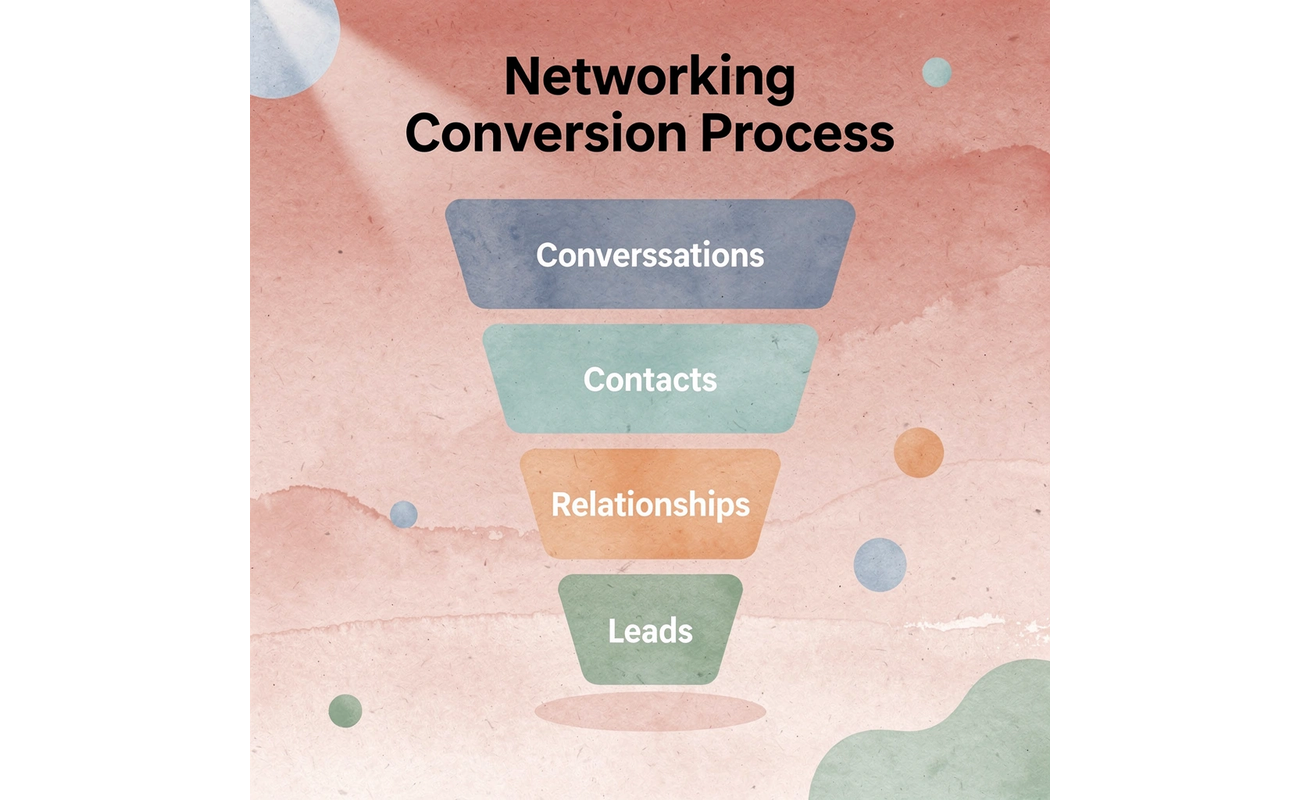
You understand how to start conversations. But if you can't turn those interactions into usable contacts, the whole process falls apart. A great exchange happens, someone asks to connect, you exchange details, and then nothing. The information sits in a DM, buried in your email, or written on a note you can't find. The opportunity disappears because you never built a system to keep it.
🎯 Key Point: The gap between great conversations and organized contacts is where most networking efforts die—don't let manual processes kill your momentum.
Most people handle this by manually entering contact information after the fact or relying on scattered notes across platforms. When tracking only a few people, this feels manageable. But as your network grows and conversations multiply across LinkedIn, Twitter, and Instagram, manual entry becomes a bottleneck: details get lost, follow-ups slip through the cracks, and promising connections never reach your CRM where they can turn into pipeline.
.webp)
"The difference between a conversation and a conversion often comes down to a single moment—the handoff from interaction to organized follow-up." — Networking Research Institute, 2024
Tools like digital contact card capture contact information instantly and sync it directly to your CRM. Our digital contact cards eliminate the friction between conversation and connection: instead of relying on memory or manual data entry, you create a seamless handoff from interaction to organized contact. When someone expresses interest in your work or asks about collaboration, you don't lose them.
⚠️ Warning: Without a systematic approach to contact capture, even your best networking conversations become missed opportunities that never convert to business.
Manual Contact Management
- Scattered notes across platforms
- Manual data entry after events
- Lost follow-ups and missed connections
- Hope-based networking
Automated Contact Capture
- Centralized contact database
- Instant sync to CRM
- Trackable relationships with reminders
- System-driven pipeline building

The difference between effective networkers and those who collect names is simple: one group has a system that turns interactions into trackable relationships. The other hopes to remember who said what and when to follow up. If you want social media conversations to become opportunities, you need infrastructure that makes follow-through automatic, not aspirational.
Book a demo today and see how Mobilo turns your networking into organized, trackable leads. Get started in minutes: your first 25 digital business cards are free.