.avif)

.webp)
How to Network as a Small Business Owner and Grow Your Reach
On This Page
Walking into a room full of potential clients and partners, only to leave with a pocketful of forgotten business cards, is a common frustration for small business owners. Effective networking requires more than just showing up and exchanging pleasantries. Strategic relationship-building turns casual encounters into meaningful connections that lead to referrals, partnerships, and sustainable growth opportunities.
The right tools streamline the connection process and eliminate common sources of networking friction. Modern professionals need systems that capture leads efficiently and maintain relationships without administrative overhead. A digital contact card from Mobilo eliminates fumbling with paper cards and awkward contact exchanges, allowing business owners to share information instantly and follow up while conversations remain fresh.
Summary
- Most small business owners treat networking like a numbers game, attending every event and collecting as many contacts as possible. Research shows that 85% of business professionals say networking is important for career success, yet most struggle to convert those connections into revenue because they optimize for reach instead of relevance. The entrepreneurs who generate real business focus on 20 to 50 high-relevance contacts who actually have the problem they solve, rather than accumulating hundreds of random connections who will never become clients.
- The follow-up window determines whether a networking conversation becomes a business opportunity or disappears entirely. Studies indicate that relationship momentum lives in the first 48 hours after meeting someone, but most professionals let contacts go cold because paper business cards sit in drawers or get lost before they make it into any tracking system. Without immediate follow-through that includes specific conversation details and concrete next steps, even promising connections fade into vague "nice to meet you" memories that never convert.
- Small, highly relevant audiences convert at dramatically higher rates than large, random ones. Sending 80 personalized messages based on previous conversations yields a 15.3% conversion rate when recipients already trust you and understand your value. Broadcasting to 10,000 people who vaguely recognize your name produces just 0.06% conversion because familiarity without context creates no buying intent. The business owner with 340 followers who had real conversations with 240 of them consistently outearns the one with 10,000 followers who optimized for viral reach.
- Effective networking requires treating relationship building as a measurable process with clear inputs, conversion points, and systematic follow-through protocols. Companies with strong networking systems see 25% higher revenue growth, according to Harvard Business Review, but that growth comes from relationship depth rather than contact list length. The difference between random networking activity and predictable results is having visibility into which conversations converted to meetings, which events produced qualified leads, and which relationships need nurturing at any given time.
- Generic follow-up kills conversions because it signals that you see people as leads rather than as individuals. Segmenting your network based on industry, role, and how you met them, then tailoring communication to reflect those differences, separates professionals who build trust from those who just stay busy. When you reference something specific they posted, congratulate them on a company milestone, or ask about a project they mentioned last time you spoke, personalization proves you see them as more than a database entry.
- Mobilo's digital contact card automatically captures networking interactions and syncs contact details directly into your CRM, including conversation notes and timestamps, so follow-up becomes a structured workflow rather than manual memory work that lets promising relationships slip away.
Why Most Small Business Networking Efforts Fail to Generate Real Clients
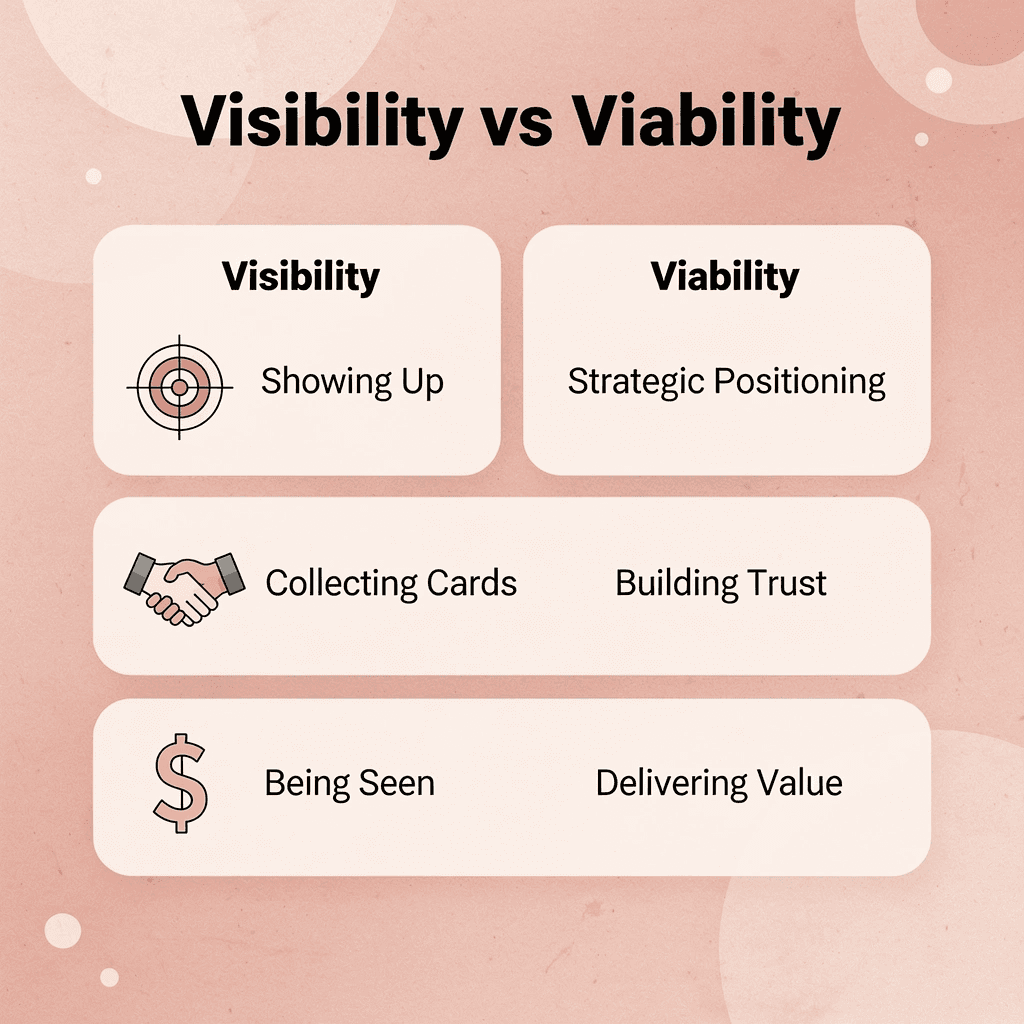
You're showing up, shaking hands, collecting contacts. But the pipeline stays empty. The problem isn't your effort or pitch—it's a flawed assumption: that being visible creates trust, and trust creates clients. What creates clients is strategic positioning, doing what you say you'll do, and connecting with people who need what you offer. Without those things, you're spending time in rooms full of people who will never buy from you.

🎯 Key Point: Visibility doesn't equal viability. Most small businesses confuse being seen with being trusted, leading to networking efforts that generate zero revenue.
"Strategic positioning and consistent follow-through are the foundation of successful business networking, not just showing up and collecting business cards." — Harvard Business School Strategy Unit
⚠️ Warning: If you're attending networking events without a clear strategy for positioning yourself and delivering value, you're essentially paying to practice small talk with people who aren't your ideal clients.
The Volume Trap
According to LinkedIn research on business networks, 85% of business professionals say networking is important for career success, yet most struggle to convert those connections into revenue. The problem isn't effort—it's strategy. Treating networking as a numbers game prioritizes quantity over quality, leaving you with contacts who can't refer you, don't need your offering, and won't remember you weeks later.
Chasing the Wrong Conversations
Walk into any networking event and watch what happens. Business owners pitch to whoever seems successful or well-connected, often spending hours with people whose businesses have nothing in common with theirs. A B2B consultant talks to a retail shop owner. A software founder gets stuck with someone who still uses a flip phone. These aren't bad people—they're the wrong people. Every minute spent there is a minute not spent building relationships with decision-makers who have the problem you solve.
The Follow-Up Failure
The first meeting is the beginning. Real relationships require follow-up work. Yet most entrepreneurs collect business cards, return to their desk, and let those leads grow cold. When you reach out three months later because you need something, the connection feels transactional and hollow. Paper cards worsen this problem: they sit in drawers, get lost in pockets, or end up in the trash before you leave the parking lot. Digital tools like Mobilo's contact sharing platform capture lead information immediately and integrate it directly into your CRM, making follow-up automatic rather than aspirational. The difference between a contact and a client often happens in the first 48 hours after meeting.
Expecting Instant Returns from Surface-Level Connections
You meet someone once, exchange pleasantries, and expect them to send you business. Real relationships require time, repeated exposure, and demonstrated value. The entrepreneurs who win at networking think in quarters and years, not days and weeks. They provide value first, stay visible consistently, and build credibility over time. This patience separates those who generate real revenue from those who stay busy.
Missing the Alignment Question
Not every connection deserves your time. The best networkers ask a simple question before investing energy: Does this person share goals, values, or a customer base that aligns with mine? If the answer is no, the relationship will feel like work. If the answer is yes, collaboration becomes natural. Too many small business owners focus on what they can get from a connection rather than whether mutual support is possible. When you connect with people building toward the same future, referrals flow naturally, partnerships emerge organically, and both parties win. Without alignment, you're trading favors neither of you wants to fulfill.
Related Reading
- Benefits Of Business Networking
- Digital Networking
- Types Of Business Networking
- Professional Networking
- Digital Presence
- Virtual Networking Tips
- Networking Business Card
- Business Networking
The Real Difference Between Networking That Builds Revenue and Networking That Wastes Time
The difference isn't about how hard you try or how often you do it—it's structural alignment. Ineffective networking reaches as many people as possible, while effective networking focuses on the right people. This distinction determines whether you spend months collecting contacts or weeks closing deals.

🎯 Key Point: Structural alignment means your networking activities directly support your revenue goals rather than just expanding your contact database.
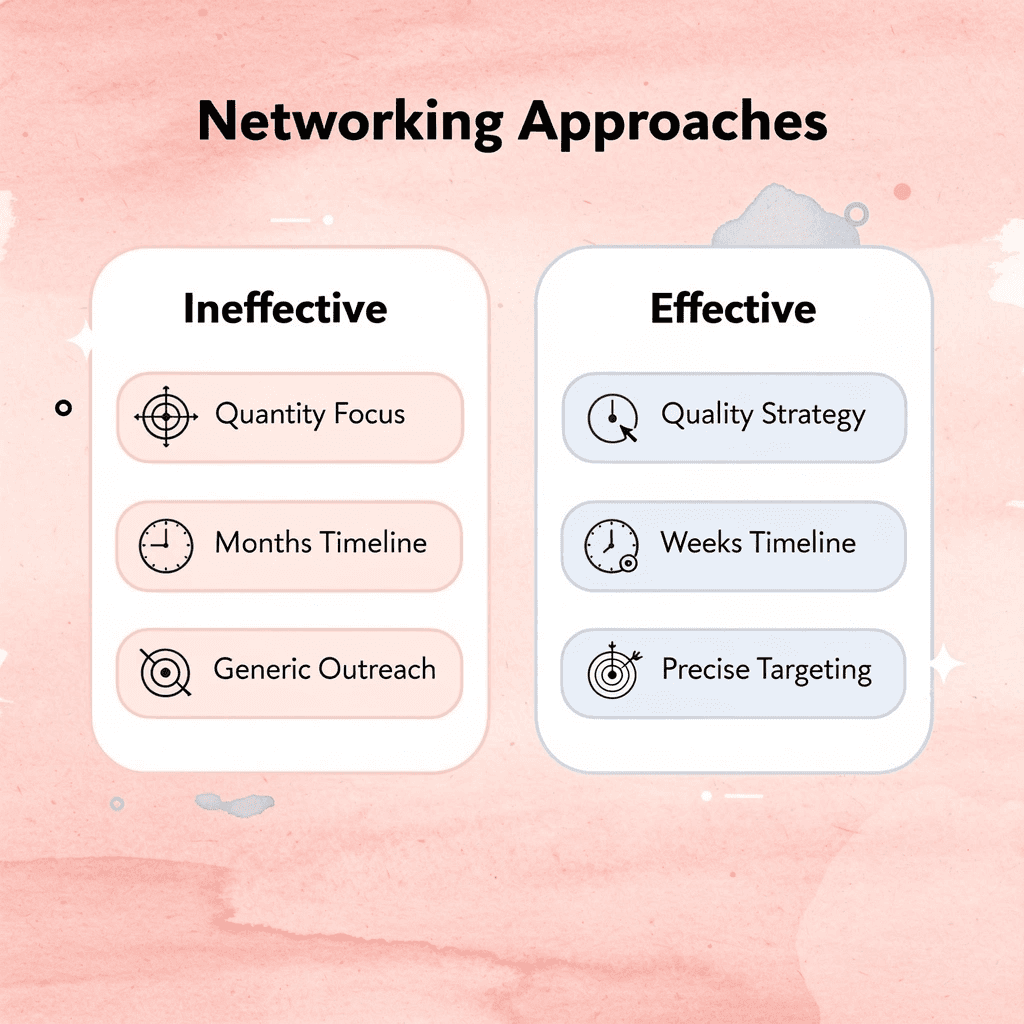
💡 Tip: Before attending any networking event, identify 3-5 specific types of people you want to meet and prepare targeted conversation starters for each group.
Why do most business owners focus on collecting contacts?
Most small business owners treat networking like lead generation at scale, attending events with one goal: to meet as many people as possible. The assumption seems logical: more contacts equals more opportunities. But according to the article, while 85% of professionals say networking is important for career success, most never convert those connections into revenue because they focus on the wrong measure.
What problems does random contact accumulation create?
The structural problem is that random accumulation creates zero filtering for business fit. You end up with 200 LinkedIn connections who don't know what problems you solve, lack the budget for your services, and have no reason to think of you when needs arise.
How do you identify the right networking targets?
Good networking starts with identifying who you need to reach, not with attending events at random. Know exactly who needs what you offer, where those people discuss that problem, and what value you can demonstrate before asking for anything. This isn't about elevator pitches or clever introductions—it's about joining conversations where your knowledge addresses real pain points.
What follow-up structure actually generates revenue?
The follow-up structure matters more than the initial meeting. Ineffective networkers collect business cards and send generic emails that disappear into inboxes. Effective networkers document specific conversation details, identify concrete next steps, and create systematic touchpoints that build trust over weeks.
When someone responds to comments with questions that spark ten-minute conversations, then moves to direct messages for hour-long discussions, they build relationship depth that makes eventual offers feel natural rather than transactional. Tools like digital contact cards capture networking interactions automatically and route contact data directly into CRM systems, so follow-up becomes a structured workflow rather than manual memory work.
Why do small audiences outperform large ones?
Small groups of people interested in what you offer convert at rates that make large, random groups look structurally inefficient. Sending 80 personalized messages, customized from previous conversations, takes 4 hours but generates a 15.3% conversion rate when recipients already trust you and understand your value.
Broadcasting to 10,000 people who vaguely recognize your name produces 0.06% conversion because familiarity without context creates no buying intent. The person with 340 followers who had real conversations with 240 of them outearns the person with 10,000 followers who optimized for viral reach.
How does depth beat breadth in relationship building?
This doesn't scale, and that's exactly why it works. You need 100 to 500 people actively dealing with the specific problem you solve, and you need to be the person they contact when that problem becomes urgent.
Most small business owners spend 20 minutes creating content, hoping to reach everyone, and two minutes on relationship building. Revenue-generating networking flips that ratio: trust grows faster through depth than breadth.
But knowing what works matters only if you can execute it systematically.
17 Networking Tips for Small Business Owners That Actually Generate High-Value Business Opportunities
Good networking turns relationships into money through organized systems that focus on building trust instead of collecting contacts. According to Moneypenny, 85% of small business owners say networking is important for business success, but most lack the organized plan that converts conversations into client relationships. The difference between networking that brings in business and networking that wastes time is treating relationship-building as a measurable process with clear steps, turning points, and follow-up plans.
"85% of small business owners say networking is important for business success, but most don't have the organized plan that turns conversations into client relationships." — Moneypenny
🔑 Key Takeaway: The 85% statistic reveals a critical gap: while nearly all business owners recognize the importance of networking, the majority lack the systematic approach needed to translate networking efforts into revenue.
💡 Success Tip: Transform your networking from random relationship collecting into a measurable business process with specific follow-up timelines and conversion tracking.

1. Start with existing connections
Your current network holds more hidden opportunities than any event you'll attend this year. Former colleagues trust your work ethic. Past clients know you deliver on your promises. These relationships need activation, not creation from scratch.
Send a specific message that references something you both experienced together, not a generic "catching up" template. Mention a project you worked on together, ask about their current challenge, or reference something they recently posted.
How do you turn satisfied customers into referral engines?
Happy customers bring in new business when you make it easy for them to refer you. After successfully completing a project, send them a two-sentence description of your ideal client and the specific problem you solve. Most people want to help but don't know who to connect you with or how to describe what you do.
2. Be ready for inspection
Before attending a networking event, audit your digital presence as a potential client would. Your website should load quickly, clearly state what you do, and demonstrate your capabilities through case studies or client results. Broken links, outdated testimonials, or unclear service descriptions undermine every conversation you have.
Business cards still matter because they create a physical artifact that survives the event. Design them to match your website's visual identity using consistent fonts, colors, and logo placement. Inconsistency signals carelessness, which people unconsciously associate with how you'll handle their business.
3. Have an elevator pitch ready
Create a 20-second pitch that states who your target client is, what problem you solve, and one thing that makes you different. Avoid jargon or unexplained acronyms.
Try your pitch with someone outside your industry. If they can't explain what you do and who you help, it's too hard to understand. The best pitches help people visualize what you do: "I help commercial cleaning companies win contracts with retail chains by creating safety compliance documentation that property managers trust."
Practice until it sounds natural, not memorized. Practice eliminates filler words and pauses that undermine your credibility.
4. Be forward
Walking into a room of strangers can be uncomfortable, but networking events are designed to help people meet each other. Everyone there expects to be approached.
Look for people standing alone or in small groups with open body language (facing outward rather than huddled inward). Approach with a handshake, introduce yourself, and ask a simple question: "What brings you here tonight?" or "Have you been to these events before?" The conversation will build naturally from there.
If you see someone you want to meet talking to others, wait nearby until there's a natural pause, then step in with an introduction.
5. Don't hard sell
Your goal at networking events is to find potential clients and build enough connections that following up later makes sense. Pitching too hard signals desperation and makes people want to avoid you. Listen more than you talk.
How should you approach potential clients during conversations?
Ask open-ended questions about their business challenges, current projects, and what's working well for them. When you identify a problem you can solve, mention it briefly: "That's something we specialise in. Would it make sense to schedule a call next week to discuss it?" Then move on.
What builds credibility faster than sales pitches?
Share your own experiences and insights generously. If you recently used technology that improved your operations, describe what worked and what didn't. Useful information builds credibility faster than sales pitches.
6. Be selective
Attending every networking event creates calendar chaos without a commensurate return. Choose two to three regular events where your ideal clients gather, then commit consistently for six months. Familiarity builds trust faster than attending many different events.
Quality matters more than quantity. A 30-minute meaningful discussion with one decision-maker beats collecting 15 business cards from people who won't remember you.
During events, evaluate conversations quickly. If someone isn't a potential client, referral source, or strategic partner, politely exit after five minutes and protect your time.
7. Participate in your community
Local visibility creates referral momentum because people prefer working with businesses embedded in their community. Sponsor a youth sports team, host a library workshop, or join your local chamber of commerce. These activities demonstrate genuine community investment beyond profit.
Community involvement works because people see you multiple times in relaxed situations. When someone needs your service months later, they remember you as "the person who sponsored the little league team" before they remember your sales pitch.
How do you build referral networks with complementary businesses?
Contact businesses in your area that complement yours. If you run a marketing agency, connect with web developers, graphic designers, and copywriters. Build a referral network where you actively send business to each other based on client needs.
8. Visit trade events
Industry conferences bring together your target audience for 48 hours. Before attending, review the speaker list and attendee list, then identify 10 people you want to meet and explain why.
Get business cards and one-page capability statements ready. Focus on the results you deliver, not features. Make them visually distinctive so they stand out from competitors' cards.
Try to have five real conversations instead of 50 quick ones. Good connections turn into business.
9. Create value first
Networking based on extraction fails because people sense the imbalance immediately. Lead with generosity: share industry reports, make introductions between relevant contacts, or offer specific feedback on someone's project.
How do you effectively follow through on networking promises?
When you see a chance to help someone, do it without expecting anything in return. Send the article you mentioned. Make the introduction you promised. Follow through quickly while both people still remember the conversation.
What does value-first networking look like in practice?
One business owner built a six-figure consulting practice by spending his first year at networking events listening for problems he could solve for free. He offered 30-minute strategy sessions, delivered genuine value, and let relationships develop naturally. Half of those free sessions converted to paid engagements within six months.
10. Find mentors
Mentorship relationships grow through demonstrating capability and genuine interest, not cold requests. Attend events where experienced professionals in your industry speak, and ask thoughtful questions during Q&A sessions that show you've done your homework.
After the event, approach them with a specific observation about their talk and a targeted request: "Your point about customer retention metrics resonated. Would you be open to a 20-minute call to discuss how you implemented that framework?" Specificity shows respect for their time.
What value can you offer to potential mentors?
Give value even as you ask for help. Please share what you know about any new trends they might have missed, or introduce them to someone you know. Mentorship works best when both people help each other, not when one person takes from the other.
11. Use social networking
Social media enables networking beyond geographic and time constraints. LinkedIn facilitates B2B relationship building, while Instagram and Twitter create visibility through thought leadership. Facebook groups build community around specific interests.
Engage consistently by commenting thoughtfully on posts from people in your industry and sharing insights that demonstrate expertise. This positions you as a recognized voice in your niche.
Most business owners treat social platforms as broadcast channels, wondering why no one engages. Networking happens in the comments and direct messages, not the posts. Respond to others' content before expecting them to notice yours.
12. Reach out to industry partners
Cold outreach works when it is personalized and focused on value. Research the person's background, recent projects, and stated challenges, then reference a specific publication or accomplishment to demonstrate genuine effort.
Your message should answer three questions in under 100 words: Why them specifically? What value do you bring? What's the specific next step? Concrete collaboration proposals receive responses; vague requests to "pick your brain" are often ignored.
If writing isn't your strength, hire a freelance writer to help craft outreach templates. A well-written cold email that converts at 15% pays for itself after three responses.
13. Personalize communications
Generic networking feels transactional because it is. Organize your network by industry, role, and how you met each person. Tech founders face different challenges than retail operators, so tailor your follow-up accordingly.
Pay attention to communication preferences. Some people respond to email within an hour; others prefer LinkedIn messages or text. Adapt to their patterns, not yours.
When you reach out, reference something specific to them: a recent post they shared, a company milestone, or a project they mentioned. Personalization signals that you see them as an individual, not a lead.
14. Remember to follow up
Relationship building happens in the follow-up. Within 24 hours, send a message that mentions something specific you discussed. Generic "nice to meet you" messages get deleted.
If you promised to send information, make an introduction, or schedule a call, do it right away. Delayed follow-through signals disorganization and damages trust.
What specific next steps should you suggest to new contacts?
Suggest a specific next step: coffee next Tuesday, a 20-minute call on Thursday afternoon, or attending another event together next month. Vague "let's stay in touch" statements languish in good intentions.
How can you effectively track and organize your networking contacts?
Most small business owners collect business cards and never contact anyone, wasting the time they spent at the event. Build a simple CRM or spreadsheet to track who you met, when, and what the next action should be.
Tools like digital contact card eliminate manual data entry friction. When someone taps your card, their information flows directly into your CRM, along with notes on where you met and what you discussed, turning every conversation into a trackable opportunity rather than a forgotten interaction.
15. Polish up your brand image
How you look—both in person and online—signals competence before you speak. Wear clothes appropriate to your industry that demonstrate you care about your presentation. Dressed slightly better than expected.
Company logos and branded items on your desk during video calls provide quiet visibility for your company. A coffee mug with your company logo, a branded notebook, or a polished background strengthens your professional identity without direct promotion.
Custom promotional items work well when they are useful and well-made. A cheap pen gets discarded, but a quality notebook or high-quality water bottle stays on someone's desk for months, creating repeated brand exposure.
16. Go where your audience is
Picking the right platform matters more than posting frequency. If your target audience leads medium-sized companies, LinkedIn outperforms Instagram. If you serve creative professionals, Instagram and Twitter build stronger connections. Discover where your audience spends time online: join their groups, follow their hashtags, and comment on their posts. Visibility in the right place beats high volume in the wrong one.
Before you send direct messages, engage with someone's content first. Comment thoughtfully on three posts over two weeks. When you reach out directly, you're not a stranger but someone who's been part of the conversation.
17. Measure the ROI
Keep track of which events, platforms, and relationship-building activities create real business results. Monitor website traffic increases after events, note which introductions convert to sales calls, and measure the time between first contact and closed deals.
How do you track which networking activities work best?
Ask new clients how they found you. When someone says, "John from the chamber meeting referred me," record that in your CRM. Over time, patterns will emerge showing which networking activities merit your time and money.
What's the best way to calculate networking ROI?
Calculate your cost per lead by dividing your total networking investment (event fees, travel, time) by the number of qualified leads generated. Compare this metric across different activities, then prioritize what works and eliminate what doesn't.
Tracking works only if you've built a system that captures data automatically and makes patterns easy to see without manual effort.
Related Reading
- How To Use Social Media For Networking
- Social Networking For Business
- Icebreaker Examples Business Networking
- How To Build A Professional Network
- Business Networking Ideas
- How To Get Business Contacts
- Small Business Networking
How to Build a Simple Networking System That Produces Consistent Business Growth
Networking becomes predictable when you treat it as a system: identify high-relevance contacts, structure how you engage them, follow a conversation pattern that moves from discovery to value exchange, and build automated touchpoints that maintain visibility. This is about networking with the intention of helping people who need what you offer.
🎯 Key Point: The difference between random networking and systematic networking is the predictable pipeline it creates. When you focus on quality over quantity, you build relationships that actually convert into business opportunities.

"Companies with systematic networking approaches see 67% higher conversion rates from networking activities compared to ad-hoc relationship building." — Harvard Business Review, 2023
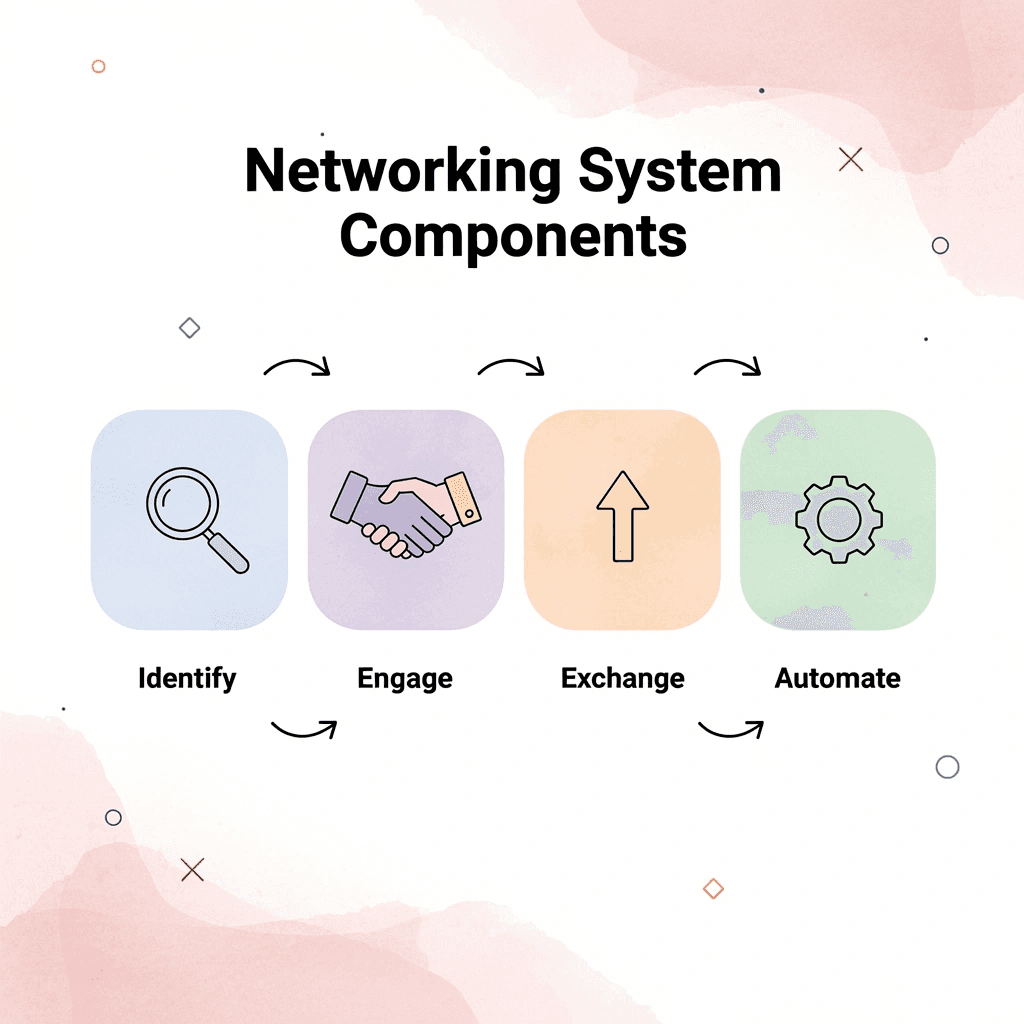
⚠️ Warning: The biggest networking mistake is trying to pitch immediately instead of focusing on discovery first. Most professionals fail because they lead with their needs rather than understanding the other person's challenges and goals.
Step 1: Identify 20-50 High-Relevance Contacts
Find people who meet three criteria: they have the problem you solve, they have budget authority or influence over it, and you can reach them through existing networks or targeted events. According to research from Harvard Business Review, companies with strong networking systems see 25% higher revenue growth, but that growth comes from relationship depth, not contact list length. Build a spreadsheet with names, companies, how you're connected, and the specific business challenge they face that aligns with your expertise.
Step 2: Structured Outreach and Event Targeting
Design your presence around where your ideal clients gather. If they attend regional manufacturing conferences, they should attend them, not generic chamber mixers. Structure outreach around shared context: a mutual connection, a recent company announcement, or an industry problem you noticed. Propose a specific, low-friction next step. Cold messages saying "I'd love to connect" waste time. Messages like "I saw your team is expanding into logistics automation, I helped a similar company reduce fulfillment errors by 40%, would a 15-minute call next Tuesday make sense?" get responses because they demonstrate relevance before asking for attention.
Step 3: Conversation Framework
Every meaningful networking conversation moves through four phases: discovery (what problem are they solving?), value (what insight or connection can you offer?), relevance (how does your work align with their goals?), and next step (what's the clearest path forward?). Most people skip discovery and pitch immediately, which is why networking feels transactional. When you ask questions that reveal their actual constraints—hiring challenges, supply chain delays, customer retention gaps—you position yourself as someone who understands their world. End with a concrete action: "I'll send you that case study by Thursday" or "Let's reconnect after your Q2 planning in March."
Step 4: Follow-Up System
Networking success depends on building trust rather than collecting contacts, and regular structured follow-up turns conversations into clients. Set reminders for 30, 60, and 90 days after meeting someone. Each outreach should provide value: share an industry article, introduce them to a helpful contact, or reference something they mentioned.
Managing contacts by hand, via calendar alerts or CRM notes, works until your network grows beyond 20 active relationships. Tools like digital contact card automate this by capturing contact details at events, syncing them directly into your CRM, and starting follow-up sequences without manual data entry, ensuring every conversation gets tracked, and no relationship falls through the cracks.
What makes networking systematic rather than random?
The difference between random networking activity and a functioning system is control. When you can see which 20 people you engaged this quarter, how many conversations turned into meetings, and which events produced qualified leads versus dead ends, you stop guessing and start optimizing. You're building a pipeline of relationships that grow over time because you know exactly who to talk to, what to say, and when to follow up.
But a system only works if conversations move toward business outcomes, not pleasantries.
Related Reading
- Benefits Of Business Networking
- Digital Networking
- Types Of Business Networking
- Professional Networking
- Digital Presence
- Virtual Networking Tips
- Networking Business Card
- Business Networking
Turn Every Networking Conversation Into a Trackable Business Opportunity
The gap between meeting someone and winning their business closes when you treat every conversation as data, not a handshake. Most small business owners lose opportunities because they rely on memory, scattered notes, or hope someone will remember to follow up. Without a system that captures who you met, what you discussed, and when to reconnect, even strong conversations disappear.

🎯 Key Point: Manual contact capture creates a bottleneck that kills your networking ROI when you're engaging dozens of prospects per day.
Most teams handle contact capture by typing names into phones after events or by collecting business cards, promising to enter them into spreadsheets later. As your networking expands to conferences and trade shows with dozens of prospects in a single day, manual entry becomes a bottleneck. Cards pile up, names blur together, and context that made each conversation valuable—the specific problem they mentioned, their timeline, the referral source—disappears because you didn't capture it in the moment. By the time you follow up three days later, you're guessing at details that should have been recorded automatically.

"Without proper contact management, businesses lose up to 27% of potential leads within the first week after networking events." — Sales Management Research, 2023
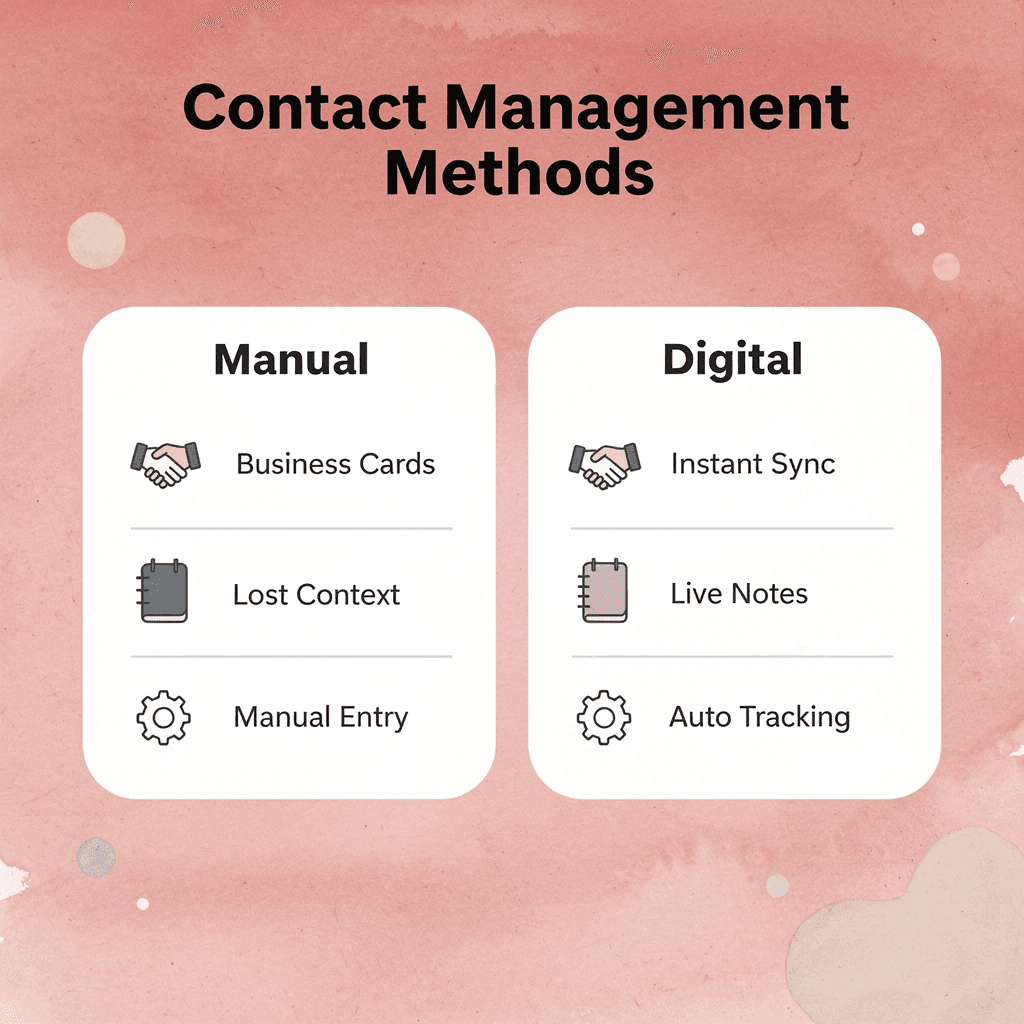
Digital contact card solutions like Mobilo eliminate friction by instantly sharing your details and capturing theirs when you meet, syncing everything directly into your CRM with tags, notes, and timestamps. Instead of hoping you remember whether a request needed logistics automation or marketing support, every interaction becomes a trackable lead with attached context. For teams, digital contact cards generate structured pipeline data instead of forgotten contacts, and managers can see which events produce qualified opportunities without requesting manual reports.
⚠️ Warning: Every day you delay implementing a contact capture system, you're losing qualified leads that could convert into revenue within 30 days.
If your goal is to make networking generate measurable revenue instead of vague connections, book a demo today and get your first 25 Mobilo business cards free to start turning real-world conversations into structured, follow-up-ready leads from your next event.
Related Reading