.avif)


What Is a Portfolio Website? How to Build and Share Yours
On This Page
You've built something worth sharing, but when someone asks to see your work, what do you send them? A scattered collection of files? A link to a social media profile that doesn't tell your full story? Understanding what a portfolio website is directly solves this problem. It's your dedicated online space where your best work lives, organized and accessible. This article breaks down exactly what a portfolio website is and best link in bio tool, why you need one, and how to build a professional online presence that attracts clients, employers, and collaborators who align with your goals.
Creating a portfolio website becomes even more powerful when you can share it instantly with anyone you meet. That's where a digital contact card from Mobilo changes the game. Instead of fumbling for business cards or typing out long URLs, you can share your entire portfolio with a simple tap or scan. Your work reaches the right people at the right moment, whether you're at a networking event, finishing a client meeting, or connecting with someone new. Mobilo turns your portfolio website into a mobile app you can carry with you, ready to showcase your talent whenever an opportunity arises.
Summary
- A portfolio website serves as your centralized professional showcase, and its absence creates measurable opportunity costs. According to a 2024 Adobe Creative Cloud study, 73% of hiring managers visit a candidate's portfolio website before contacting them, and when they can't find one, 64% move to the next candidate rather than reach out for clarification.
- Mobile responsiveness determines whether most people can actually see your work. More than 60% of portfolio website traffic comes from mobile devices according to 2025 Cloudflare Web Analytics data, which means a site that doesn't load cleanly on phones makes you invisible to the majority of people who hear about you at events or in conversations.
- Platform control protects your professional presence from sudden changes beyond your control. Social media platforms compress image quality, limit customization, and can suspend accounts without warning. A portfolio website gives you complete ownership over layout, navigation, and how you're found online, serving as a reliable backup that doesn't depend on someone else's terms of service or shifting algorithms.
- First impressions form within three seconds of landing on your homepage. Stanford Web Credibility Research shows that 75% of users judge credibility based on website design, meaning a focused, well-executed site with fewer elements outperforms a cluttered site that tries to include everything.
- Quality trumps quantity in project selection and presentation. Ten strong pieces with context (the challenge, your role, the outcome) beat thirty projects with no explanation because visitors want to understand your thinking, not just admire finished products. Process documentation strengthens stories by showing how you move from concept to execution, but it should support the narrative rather than replace it.
Mobilo's digital contact card addresses the friction between meeting someone and actually sharing your portfolio by enabling instant transfer with a single tap or scan, capturing connections while conversations are fresh, rather than relying on follow-up emails or manually typed URLs.
What is a Portfolio Website and Why Does it Matter?

A portfolio website is your curated digital showcase, a single online space where your best work lives and speaks for itself. It's where potential clients, collaborators, and employers go to see what you actually do, not just what your resume claims. Unlike scattered social media profiles or static PDFs, a portfolio website centralizes your work, your voice, and your contact information in one place you control completely.
Why a Portfolio Website Matters
Without one, you're asking people to trust you based on incomplete information. Your LinkedIn profile might list impressive job titles, but it doesn't show the design work that landed you those roles. Your Instagram might have followers, but it doesn't demonstrate the strategic thinking behind your creative decisions.
When someone wants to see your capabilities, they shouldn't have to hunt across platforms or guess at your skill level. That gap between interest and proof costs you opportunities you'll never even know existed.
The Real Cost of Invisibility
The failure point is when someone hears about you, searches your name, and finds nothing cohesive. Maybe they land on an outdated LinkedIn profile with no work samples. Maybe they find a social media account that mixes personal posts with professional projects.
They spend thirty seconds looking, don't see what they need, and move on. You never get the email. You never hear about the freelance project. The opportunity closes before you know it opened.
Hiring Decisions Start With Proof
According to a 2024 Adobe Creative Cloud study, 73% of hiring managers and creative directors visit a candidate's portfolio website before making contact. When they can't find one, or when what they find feels incomplete, 64% move to the next candidate rather than reaching out for clarification.
The pattern also surfaces in freelance marketplaces and agency pitches. Decision-makers want to see your work immediately, and every extra click from curiosity to proof increases the chance they'll give up.
Talent Loses When It’s Hard to See
People judge quickly. They form impressions in seconds, not minutes. If your best work isn't visible and easy to navigate, you're losing to someone whose work is. It's not about being the most talented person in the room. It's about being the person whose talent is easiest to verify.
What Makes a Portfolio Website Work
A strong portfolio website does more than display images or links. It communicates who you are, what you care about, and why someone should work with you. The best ones balance personality with professionalism, showing both skill and perspective.
A Bio That Shows Direction
Start with a clear bio that goes beyond job titles. Share what drives your work, what problems you solve, and what makes your approach distinct. Skip the generic "passionate creative professional" language.
Instead, tell people what you've learned, what you believe, or what you're focused on right now. Make it specific enough that the right people recognize themselves in your story.
Let Your Best Work Lead
Your recent work should dominate the experience. Prospects need to see your current abilities and style, not projects from five years ago that no longer represent where you are. Choose quality over quantity.
Ten strong pieces with context (the challenge, your role, the outcome) beat thirty projects with no explanation. People want to understand your thinking, not just admire finished products.
Make it Easy to Navigate
Easy navigation matters more than clever design. Visitors should be able to find your work, bio, and contact information within seconds. If they have to guess where to click or wait for animations to finish, they'll leave.
Mobile responsiveness isn't optional anymore. More than 60% of portfolio website traffic comes from mobile devices, according to 2025 data from Cloudflare Web Analytics. If your site doesn't load cleanly on a phone, you're invisible to most people who hear about you at events or in conversations.
Design That Supports the Work
Creative presentation should enhance your work, not overshadow it. The site itself becomes part of your portfolio, a demonstration of your taste and judgment. Generic templates signal that you took the path of least resistance. Thoughtful layouts, intentional typography, and cohesive color choices show you understand how design shapes perception.
Control in a Platform-Driven World
Social media platforms offer convenience, but they don't offer control. Instagram limits image dimensions and compresses quality. Behance organizes projects in ways you can't fully customize.
LinkedIn buries work samples under job descriptions and endorsements. Every platform prioritizes its own goals (engagement, ad views, time on site) over your goal of presenting work clearly.
Control Your Presence
A portfolio website gives you the flexibility to choose everything. Layout, image size, typeface, navigation structure. You decide what visitors see first and how they move through your work. That control extends to how you're found online.
With the right search terms and page structure, your portfolio website becomes the first result when someone searches your name. This minimizes confusion if you share a name with others and ensures your work defines your online presence.
Own a Stable Home for Your Work
Platforms change overnight. Interfaces update without warning. Features disappear. Algorithms shift what gets shown and to whom. I've watched designers lose years of work when accounts got suspended for reasons they never fully understood.
Hacked accounts, mistaken policy violations, platform shutdowns. It happens more than people expect, usually at the worst possible moment. A portfolio website serves as a reliable backup, a space that doesn't depend on someone else's terms of service or business model.
The Networking Multiplier
A portfolio website extends your reach beyond face-to-face meetings. When you meet someone at a conference, finish a client call, or connect with a potential collaborator, you need a fast way to share your work. Fumbling for business cards or spelling out long URLs breaks momentum.
Digital solutions like Mobilo turn that friction into flow. Instead of hoping someone remembers to look you up later, you share your entire portfolio with a tap or scan. Your work reaches them immediately, while the conversation is fresh and interest is high. That immediacy changes how networking translates into opportunity, turning brief encounters into lasting professional relationships.
Working for You Around the Clock
Portfolio websites also work when you're not in the room. Someone mentions your name in a meeting. A colleague forwards your site to a hiring manager. A potential client finds you through a search and explores your work at midnight. Your portfolio becomes a 24/7 representative, answering questions and building credibility without requiring your presence.
Visibility Creates Opportunity
The professionals who win aren't always the most talented. They're the ones whose talent is most visible, accessible, and convincing when an opportunity arises.
A portfolio website doesn't guarantee success, but its absence guarantees missed chances. Every day without one is another day your best work stays hidden while someone else's gets seen.
Related Reading
- Best Link in Bio Tool
- What is Link in Bio
- How to Improve Linkedin Profile
- How To Build Personal Branding
- How to Add Portfolio to Linkedin
- How To Add Link To Tiktok Bio
- How to Add Instagram Link to Tiktok
- Where is Link in Bio on Instagram
- How to Add Link to Linkedin Post
- How to Add Website Link to Linkedin Profile
- Link in Bio Examples
- How To Add Link To Tiktok Bio
- How to Add Instagram Link to Tiktok
Key Elements of an Effective Portfolio Website

A successful portfolio website needs four foundational elements:
- A clear homepage that immediately communicates what you do
- An about section that explains your approach and background
- Project pages that showcase your work with context
- Contact information that makes reaching you effortless
Everything else (testimonials, blog posts, case studies) enhances these core pieces but can't replace them.
The Homepage as First Impression
Your homepage determines whether visitors stay or leave within three seconds. Google Research found that 53% of mobile users abandon sites that take longer than 3 seconds to load, which means technical performance matters as much as visual design. A slow-loading homepage with large, uncompressed images costs you half your potential audience before they see a single project.
Clarity Beats Cleverness
The homepage should answer three questions instantly, like who you are, what you create, and why someone should care. Skip generic taglines like "Creative Problem Solver" or "Passionate Designer."
Instead, state your specific focus. "I design mobile interfaces for healthcare apps" tells visitors more than "I create beautiful digital experiences." Specificity filters for the right opportunities, while generic language attracts everyone and convinces no one.
Design for Instant Verification
Strong homepages use visual hierarchy to guide attention. Your name and core work should dominate the screen, not navigation menus or decorative elements. When someone lands on your site from a LinkedIn message or conference conversation, they're verifying what you told them.
Make that verification immediate. Featured projects, a brief statement of focus, and a clear path to more work. That's the structure that converts curiosity into engagement.
About Sections That Build Connection
The about page separates competent portfolios from memorable ones. This is where personality, perspective, and credibility intersect. Skip the chronological resume format (education, job one, job two, current role). Instead, explain what drives your work and what problems you solve well.
Show How You Solve Problems
After four days compressing a game project to meet technical constraints, one developer realized the about section needed to explain not just skills but also the approach. The story of solving a 3.4KB challenge with custom compression algorithms revealed a problem-solving methodology that was more effective than listing "JavaScript, HTML5, optimization" ever could.
Visitors don't just want to know what tools you use. They want to understand how you think when constraints get tight and solutions aren't obvious.
Use a Relevant, Professional Photo
Include a recent photo that matches your professional context. If you work in creative industries, show personality. If you're in a corporate environment, lean professional.
The image should make someone feel they'd recognize you at a conference or client meeting. Outdated photos or generic avatars create a disconnect between your digital presence and real-world interactions.
Contextualize Your Contact Info
Contact information belongs here, too, but context matters more than just listing an email address. Specify what types of projects interest you, your availability timeline, and preferred communication method.
"Currently available for freelance projects starting in Q3" gives prospects more useful information than a bare email link. When someone reaches out, they should already understand whether you're the right fit and when you could start.
Project Pages That Tell Complete Stories
Project pages fail when they show finished work without explaining the journey. A grid of polished images demonstrates execution, but it doesn't show how you think through challenges, adapt to constraints, or collaborate with stakeholders. The most effective project pages balance a visual showcase with a narrative context.
Frame the Challenge
Start each project page with the core challenge or goal. "Redesign a checkout flow to reduce cart abandonment" immediately frames success. Then explain your role, the constraints you worked within (timeline, budget, technical limitations), and the approach you took. This structure helps visitors understand not only what you created but also why specific decisions mattered.
Show Your Process
Include process work when it strengthens the story. Sketches, wireframes, and iterations show how you move from concept to execution. But process documentation should support the narrative, not replace it. Three meaningful iterations with explanation beat twenty screenshots with no context. Visitors care about your thinking, not exhaustive documentation of every step.
Prove the Impact
Outcomes make abstract work concrete. "Increased conversion by 23%" or "Reduced support tickets by 40%" translates creative decisions into business impact. When hard metrics aren't available, qualitative outcomes work too: "Client renewed for three additional projects" or "Feature became most-used section of the app." Results prove your work creates value beyond aesthetics.
Make Sharing Effortless
Most professionals handle project sharing by emailing PDFs or pasting links into messages. As your network expands and opportunities multiply, that manual process creates friction. Someone asks for your portfolio at a conference, you spell out the URL, they type it wrong, and the moment passes.
Solutions like digital contact cards eliminate that gap. A single tap shares your portfolio instantly, capturing the connection while interest is high and context is fresh. The difference between "I'll send you my site later" and "here it is now" determines which conversations convert into collaborations.
Navigation That Respects Attention
Complicated navigation structures kill engagement faster than bad design. Visitors shouldn't need to decipher your menu system or guess where to find your work. Primary navigation should include four to five clear options, including Work, About, Contact, and optionally Blog or Services. Anything beyond that creates decision paralysis.
Organize by Client Perspective
Category organization helps when you have diverse work, but keep it simple. A photographer might use "Editorial," "Commercial," and "Personal." A designer might organize by "Product Design," "Branding," and "Illustration."
Categories should reflect how clients think about hiring you, not how you organize files internally. If someone needs a logo designer, they shouldn't have to guess whether that falls under "Visual Identity" or "Brand Strategy."
Prioritize Mobile Navigation
Mobile navigation deserves special attention since most portfolio traffic comes from phones. Hamburger menus work when they're obvious and responsive. Sticky navigation that follows users as they scroll keeps core actions accessible.
Test your site on actual devices, not just browser resize tools. Touch targets that feel fine on desktop often prove too small on mobile, creating frustration that sends visitors elsewhere.
The Elements You Can Skip (At First)
Testimonials, case studies, and blog posts strengthen portfolios, but they're not essential at launch. A clean site with strong work beats a cluttered site with every possible feature.
According to Stanford Web Credibility Research, 75% of users judge credibility based on website design, meaning a focused, well-executed site with fewer elements outperforms a busy site that tries to include everything.
Launch With Core Elements
Start with the four core elements (homepage, about, projects, contact) and launch. You can add testimonials after you've collected a few strong ones. Case studies make sense once you have projects with measurable outcomes. A blog becomes valuable when you have insights worth sharing regularly, not because every portfolio needs one.
Improve Through Real Feedback
The trap is waiting for perfection before going live. Your portfolio improves through use, not endless refinement in private. Launch with your best work and clear information, then iterate based on how people actually interact with it.
Analytics reveal which projects get attention, where visitors spend time, and where they drop off. That data guides improvements better than guessing what might work.
Related Reading
- How to Add Linktree to Tiktok
- How To Add Linktree To Instagram
- How To Add A Link To Instagram Story
- How To Add Link To Instagram Profile
- Personal Landing Page Examples
- Graphic Design Portfolio Websites
- Personal Portfolio Website Design Examples
- Small Business Bio Examples
- One Page Website Examples
- Best Photography Portfolio Websites
- Instagram Landing Page Examples
How Do I Make My Own Portfolio Website?

Building your own portfolio website requires three decisions:
- Where to build it
- What to include
- How to structure the experience
The platform choice matters less than execution quality. A thoughtfully designed site on a simple builder beats a technically impressive custom-coded site with poor navigation and unclear messaging.
Nailing Your Website's Purpose
Before selecting tools or sketching layouts, define what you need this site to accomplish. The answer shapes every subsequent decision, from platform selection to content organization. A graphic designer targeting agency roles needs different functionality than a freelance writer building a client pipeline or a developer showcasing technical skills.
Define Your Website’s Purpose
Ask yourself what role this website plays in your professional life.
- Does it need to serve as a comprehensive archive of everything you've created, or should it function as a curated highlight reel of your strongest work?
- Will it primarily direct visitors to other platforms (your shop, blog, social channels), or should it stand alone as your complete professional presence?
The difference determines whether you need robust project galleries, simple link collections, or something in between.
Design for Your Field
Your field influences these choices too. A photographer might prioritize large, high-quality images with minimal text. A UX designer needs space to explain the process and thinking alongside visuals. A copywriter might lead with writing samples and client outcomes rather than images.
When someone in a creative field spent weeks building an elaborate site with custom animations, they discovered most visitors just wanted to see work samples quickly. The fancy interactions actually slowed down the experience people came for.
Choose Your Platform Wisely
Platform selection creates the foundation for everything else. Website builders like Wix, Squarespace, and WordPress offer templates and drag-and-drop interfaces that work well for most professionals. These tools handle hosting, security updates, and technical maintenance automatically, letting you focus on content rather than code.
Squarespace suits designers who value clean aesthetics and a simple setup. WordPress offers greater flexibility and customization, but requires more upfront learning. Wix falls somewhere between, offering ease of use with reasonable design control.
Custom Coding vs. Builders
Coding from scratch using HTML, CSS, and JavaScript gives you complete control over every detail. This path makes sense if you're a developer showcasing technical skills or if you need functionality that no builder provides.
Frameworks like Bootstrap accelerate custom development by providing pre-built components you can modify. The tradeoff is time investment. Custom sites can take weeks or months to build, while builder platforms let you launch in days.
Ownership and Portability Matter
The critical difference is ownership and portability. Builder platforms host your site on their servers, which means moving to another platform later requires rebuilding everything. Custom-coded sites give you complete ownership of the code and content, making migration simpler.
For most people starting out, builders provide the fastest path to a functional portfolio. You can always rebuild on a custom platform later when you have more time and specific needs that justify the effort.
Start With Structure, Then Customize
Templates provide proven layouts that work, saving you from having to solve design problems others have already solved. Most builders offer portfolio-specific templates with project galleries, about sections, and contact forms already configured.
Starting with a template doesn't mean accepting a generic design. Good templates serve as scaffolding you customize with your own colors, fonts, images, and content until the site reflects your style.
Creative Freedom vs. Templates
Building from scratch (whether using a builder's blank canvas or writing code) gives you complete creative freedom but requires more decisions. Every element placement, every spacing choice, every interaction pattern becomes a problem to solve.
This approach works when you have strong design skills and a clear vision for something existing templates can't accommodate. For everyone else, templates accelerate the process without limiting the final result.
Add Personal Information That Builds Trust
Your bio, education, work experience, and interests create context around your work. Skip the chronological resume format. Instead, explain what you care about professionally and what makes your approach distinct.
A developer might describe the types of problems they find most interesting. A designer might explain their philosophy on user-centered design. Make it specific enough that the right opportunities recognize themselves in your description.
Contextualize Your Contact Info
Include current contact information and context on your availability and project preferences. "Available for freelance projects starting in Q3" tells prospects more than a bare email address.
If you prefer initial contact through specific channels (email over phone calls, LinkedIn messages over forms), please specify. Reducing friction in the initial outreach increases the likelihood that someone will respond.
Showcase Work That Demonstrates Capability
Project selection matters more than project quantity. Ten strong pieces with context beat thirty projects with no explanation. Choose work that represents your current skill level and the type of projects you want more of. If you're trying to move into product design, feature product work prominently, even if you've historically done more branding projects.
Provide Project Context
Each project needs sufficient context for visitors to understand what they're viewing. Describe the challenge, your role, any constraints you worked within, and the outcome.
Process documentation (sketches, wireframes, iterations) strengthens the story by showing how you think through problems. Three meaningful iterations with explanations are more compelling than more than twenty screenshots with no narrative.
Optimize Visual Presentation
Visual presentation affects perception as much as the work itself. Images should load quickly without sacrificing quality. Compress files appropriately for web use.
Test how projects display on both desktop and mobile devices, since more than half of your traffic will come from phones. Poor mobile experience signals that you don't understand how people actually interact with websites.
Customize to Reflect Your Brand
Generic templates signal that you took the easiest path. Thoughtful customization demonstrates taste and attention to detail. Adjust colors to match your personal brand or the mood you want to convey. Choose typography that enhances readability while adding personality. Modify layouts to emphasize what matters most in your work.
Simple Tweaks, Big Impact
These changes don't require design expertise. Small adjustments create a significant impact. Changing a template's default blue to a color that appears in your work creates visual consistency.
Adjusting heading sizes to establish a clearer hierarchy improves navigation. Removing unnecessary template elements (social media icons you don't use, sections you don't need) creates a cleaner, more focused experience.
Publish and Iterate
Waiting for perfection before launching guarantees you'll never launch. Your portfolio improves through actual use and feedback, not endless private refinement. Publish with your best current work and clear information, then watch how people interact with it.
Analytics reveal which projects attract attention, where visitors spend time, and where they leave. That data guides improvements better than guessing what might work.
Track Visitor Behavior
Set up basic analytics through Google Analytics or your platform's built-in tools. Track page views, time on site, and navigation patterns.
If everyone visits your homepage but never clicks through to projects, your homepage isn't creating enough interest. If visitors spend minutes on certain project pages but seconds on others, study what makes the engaging ones work and apply those lessons elsewhere.
Keep Your Portfolio Current
Regular updates keep your portfolio relevant. Add new projects as you complete them. Remove older work that no longer represents your current abilities. Update your bio when your focus shifts or you develop new skills. A portfolio that hasn't changed in two years suggests you haven't grown professionally in two years, regardless of whether that's true.
Share Your Portfolio Effortlessly With Mobilo Today
Your portfolio deserves to reach the people who matter, without the friction of typed URLs or forgotten follow-ups. When you meet someone at a conference or finish a promising conversation, the gap between interest and action determines whether that connection converts into opportunity.
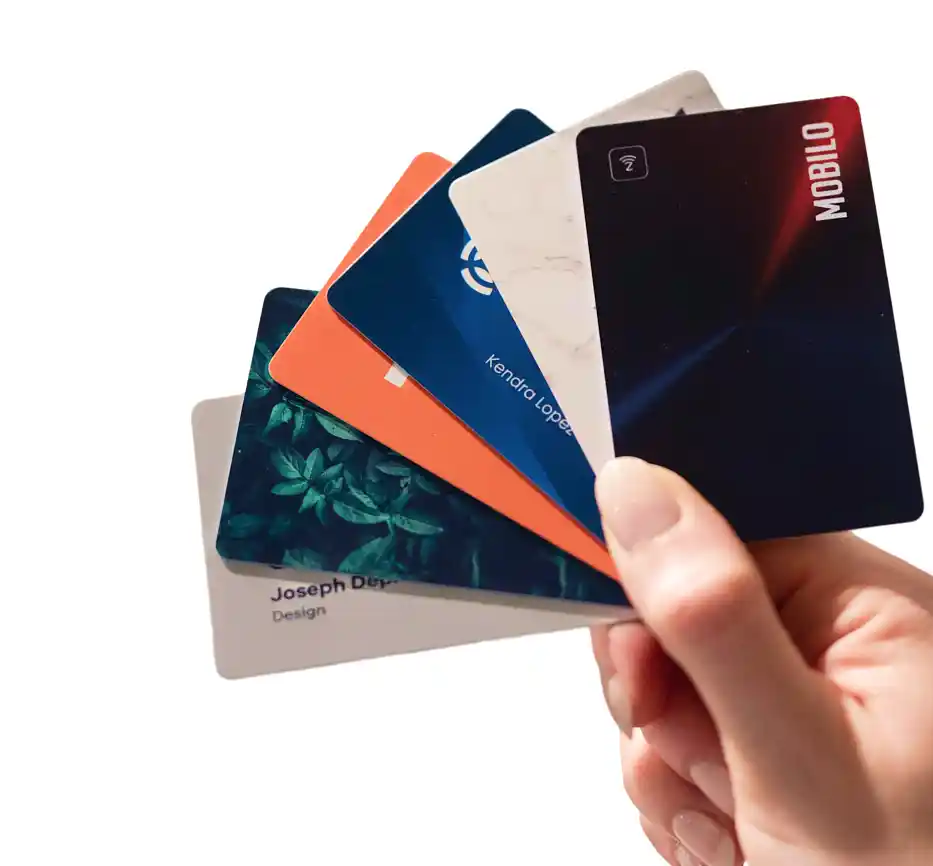
Mobilo turns your portfolio into a shareable digital contact card that transfers instantly with a tap or scan, putting your best work in front of prospects while the conversation is still fresh and momentum is high.
Streamline Sharing and Leads
You stay organized as your network grows. Every share automatically captures lead data, so you know who viewed your portfolio and when. Clients, recruiters, and collaborators see your work immediately, not after they remember to search for the link you mentioned three days ago.
Get started today and create your first 25 portfolio cards free. Sharing your work has never been simpler, and the connections you make will finally have the follow-through they deserve.
Related Reading
- Bio Site vs Linktree
- Linktree Alternatives
- Shorby Vs Linktree
- Linkinbio vs Linktree
- Linktree vs Carrd
- Beacons vs Linktree
- Beacons vs Stan Store
- Milkshake vs Linktree
- Taplink vs Linktree