.avif)

WWDC Tap to Share Explained: What It Does and How It Works
On This Page
Tapping phones is the fastest contact exchange you have ever done. It also records nothing on your end, and that is exactly where warm leads go cold.
At Apple's WWDC 2026 keynote, two iPhones touched, a contact card appeared on both screens, and millions of professionals saw tap-to-share demonstrated on hardware they already carry. The search traffic that followed tells the whole story. See virtual business cards for how this works in practice.
The common assumption, that data-entry lag is an unavoidable cost of in-person networking, is wrong. Tap to share moves contact details between devices without typing, scanning, or fumbling through an app, and it works across iPhones, Android phones, and purpose-built NFC cards that any smartphone can read without a dedicated app. Google launched Android Beam before NameDrop existed; Apple introduced NameDrop with iOS 17. The concept is not new.
Image: iPhone, Android phone, and NFC card each sharing a contact card wirelessly side by side
The mainstream spotlight is. Apple didn't build tap-to-share, it built an audience for it. For BDRs and sales managers who live at trade shows and client meetings, tapping a phone to a prospect's phone is genuinely faster than handing over a physical card, and that time saving compounds across dozens of daily interactions.
Key takeaways
- Tap to share, whether Apple's NameDrop or Android's NFC proximity sharing, delivers a contact to a phone and stops there. No CRM record, no follow-up trigger, no pipeline entry.
- NFC operates at 13.56 MHz and requires devices within roughly 4 centimeters of each other. The physics are simple; the data-capture gap that follows is not.
- NameDrop requires iOS 17 or later, but 87.2% of iPhones already run it, meaning the hardware barrier is nearly gone. The workflow barrier is what's left.
- Android NFC contact sharing isn't on by default, and the steps to enable it vary by manufacturer. That friction compounds fast when a rep is mid-conversation at a trade show.
- Surveying 4,000 sales reps found that 90% of new contacts never enter a CRM because the manual entry step is too much effort. Native tap-to-share doesn't fix that, it just moves the bottleneck from paper to notification.
- The tap is the easy part. Forty NameDrop exchanges at a two-day event still produce zero pipeline if nothing automates the handoff to your CRM.
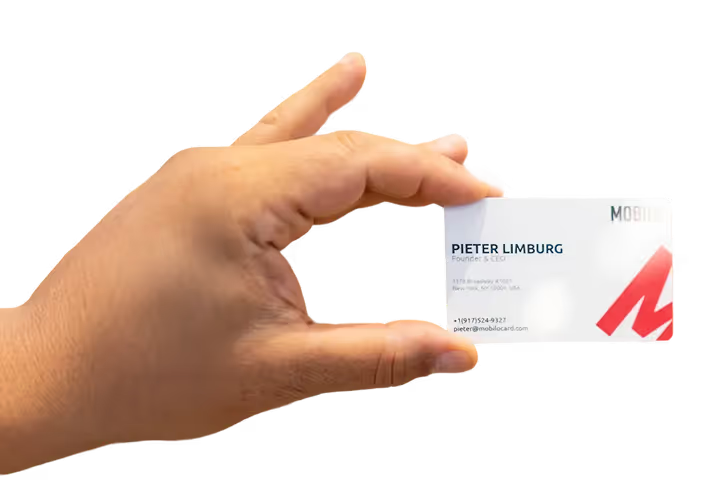
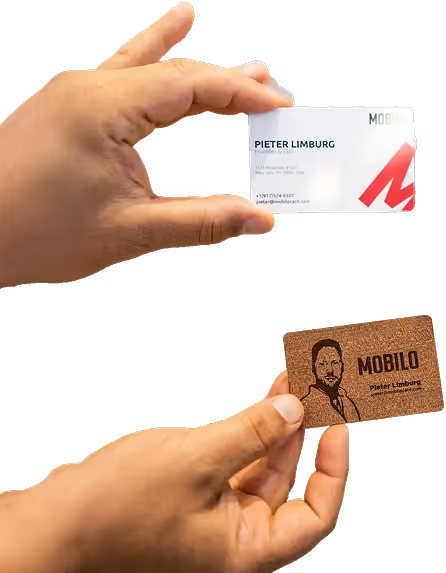
- Mobilo's NFC business card closes that gap: one tap against any smartphone, no app required on the recipient's end, shares the cardholder's digital profile and syncs the contact directly into your CRM before the conversation ends.
How Tap to Share Works - NFC, NameDrop, and the Technology Behind the Tap

That handoff runs on a radio protocol most people have never thought about. 56 MHz and requires two devices to be within approximately 4 centimeters of each other, a maximum practical range the NFC Forum's published technical specifications confirm is intentionally short. That proximity requirement is not a limitation; it is the design.
The signal is intentionally weak, so the tap must be deliberate. No internet connection is involved. Data travels directly between devices over the short-range radio link in under a second.
Image: NFC hub diagram showing Mobilo card, iPhone NameDrop, and Android tap-to-share connections
NFC operates in three modes: card emulation, reader/writer, and peer-to-peer. Peer-to-peer mode lets two Android phones swap contact data by touching. Reader/writer mode lets a phone receive data from a passive NFC tag embedded in a physical card.
56 MHz protocol powers both, meaning a tap between two phones and a tap between a phone and an NFC business card are identical at the radio layer. For professionals meeting dozens of contacts at a trade show, removing that setup barrier is the difference between a contact received and a contact never attempted.
How Apple NameDrop Combines NFC and Ultra Wideband to Trigger the Share UI
Apple's NameDrop, introduced in iOS 17, uses Ultra Wideband (UWB) alongside NFC to detect precise spatial proximity between two iPhones, then triggers the contact-sharing animation when devices are held face-to-face within a few centimeters. UWB handles directional awareness; NFC handles the data transfer. NameDrop requires two iPhones running iOS 17 or later, and both users must accept the share prompt. A plain NFC card tap requires neither, one side is passive hardware with no operating system. For a rep whose prospect is on Android or whose phone is low on battery, the card removes every compatibility variable.
NFC Cards vs. Phone-to-Phone - Same Protocol, Different Hardware Layer
A passive NFC tag contains no battery and no processor. It harvests the electromagnetic field generated by the reading device to power transmission, according to industry data specification documentation.
Tap to Share on iPhone - How to Enable It, Use NameDrop, and Turn It Off
The card works without any software handshake), but the moment both parties are on iPhone, software version becomes the deciding variable. Whether NameDrop is active on your iPhone depends entirely on which iOS version is running. NameDrop requires iOS 17 or later, released in 2023.
87.2% of active iPhones run iOS 18 or later, making the eligible user base enormous. Apple Wallet Tap to Share, the payment-and-pass sharing feature generating buzz after WWDC 2026, arrives with the latest iOS release currently in beta. These are two separate features with separate version gates; conflating them is the most common setup mistake sales reps make before a conference.
Both screens display a share prompt almost immediately, the sender sees their contact card rise from the bottom; the recipient sees an "Accept" option appear. Neither person needs to unlock an app or scan a code.
Choosing What You Share - Contact Card, Phone Number, Email, or All Three
Before confirming, the sender can tap "Share" to send their full contact card or choose a specific field, a rep can share only a work email without exposing a personal number. The recipient receives the selection directly into their Contacts app, formatted and ready.
The Silent Gap NameDrop Leaves - It Records Nothing on the Sharer's Side
The recipient gets your contact details. You get nothing, no log entry, no notification, no pipeline record. Industry estimates suggest the majority of contacts exchanged at networking events never make it into a CRM, a pattern NameDrop's architecture does nothing to change. Most sales reps do a manual CRM upload after the event. That lag is where warm leads go cold.
NameDrop Setup Checklist - Before Your Next Event
87.2% of active iPhones run iOS 18 or later
1. Confirm iOS version
- Must be iOS 17 or later (iOS 18+ recommended)
2. Enable NameDrop
- Settings → General → AirDrop → toggle "Bringing Devices Together" on
3. Set contact card
- Settings → Contacts → My Info → select your card
4. Choose share scope
- Decide in advance: full card, email only, or phone only
5. Verify both parties' iOS
- NameDrop requires iOS 17+ on BOTH devices
6. Disable if not wanted
- Settings → General → AirDrop → toggle "Bringing Devices Together" off
Pro tip for sales reps: Run through this checklist the night before any event, not in the lobby.
Tap to Share on Android and Samsung - How to Enable NFC Contact Sharing

That recording gap isn't unique to Apple's ecosystem. Plug in a Samsung Galaxy and try to tap-share a contact at a client meeting, and you'll hit the first surprise fast: NFC isn't on by default. Android holds the dominant share of global smartphone shipments, a figure consistently cited across Counterpoint Research, IDC, and Statista data, which means the majority of tap-to-share interactions in the field happen on Android devices.
The hardware is almost always there. The setup, less so. That extra layer catches people.
Image: NFC business card tapping Android phone, bypassing confusing settings setup
A rep enabling NFC for the first time at a trade show will often search "NFC" in settings, land on the wrong menu, and assume the feature doesn't exist. It does. Enabling NFC for payments and enabling it for contact sharing use the same toggle, so if tap-to-pay works on a Samsung device, contact sharing is already armed.
The iOS-Android Cross-Platform Problem
iOS restricts background NFC to Apple's own NameDrop protocol. When an Android rep taps toward an iPhone, there is no native cross-platform handshake. The fallback is a browser-opened vCard link: the iPhone user receives a URL, opens it in Safari, and manually saves the contact. That's not a tap-to-share.
The structural fix isn't a settings change, it's removing the OS from the equation entirely.
The Gap Native Tap to Share Doesn't Close: and Where Warm Leads Go Cold
Forty contacts tapped. Zero CRM entries. That is the exact situation a BDR faces returning from a two-day trade show, phone full of NameDrop exchanges, memory already blurring which prospect said what.
Image: Sales rep's desk with phone full of tap contacts but empty CRM dashboard slots
The tap worked perfectly. The pipeline got nothing. Most sales professionals assume that data-entry lag after in-person networking is simply an unavoidable cost of the job, that "you tap, you collect cards, you enter them later" is just how the workflow runs.
That assumption obscures a structural problem native sharing was never designed to solve. Native tap-to-share is a delivery mechanism, not a capture system. When you bump phones with a prospect, your contact leaves your device and lands in theirs.
Your side of the exchange records nothing: no name, no company, no timestamp, no record that the conversation ever happened.
The tap worked perfectly. The pipeline got nothing.
The Post-Tap Data Entry Problem Native Sharing Did Not Eliminate
Switching from a physical card to NameDrop doesn't remove manual data entry, it relocates it. Instead of typing from a stack of cards, the rep is typing from a mental list, which is worse. Industry data indicates the average sales rep takes up to three days after a trade show to log contacts into a CRM. That three-day window is where warm leads go cold. The majority of trade show leads never receive a follow-up, regardless of how contact was exchanged. The method of sharing is not the variable. The absence of automatic lead capture is.
No Attribution, No Tracking - The Lead That Vanishes Into a Stranger's Phone
Once a NameDrop or Android NFC exchange completes, there is no mechanism on the sender's side to know whether that contact replied, booked a meeting, or became pipeline. No open rate. No click signal. No CRM entry. This is not a networking follow-up problem; it is an architectural one. Apple and Google built the handshake. Neither built what comes after it. The tap happened. The record did not.
The Smarter Way to Share - NFC Business Cards That Capture the Lead, Not Just the Contact

Why Hardware-Agnostic NFC Cards Work With Every Phone, No App Required
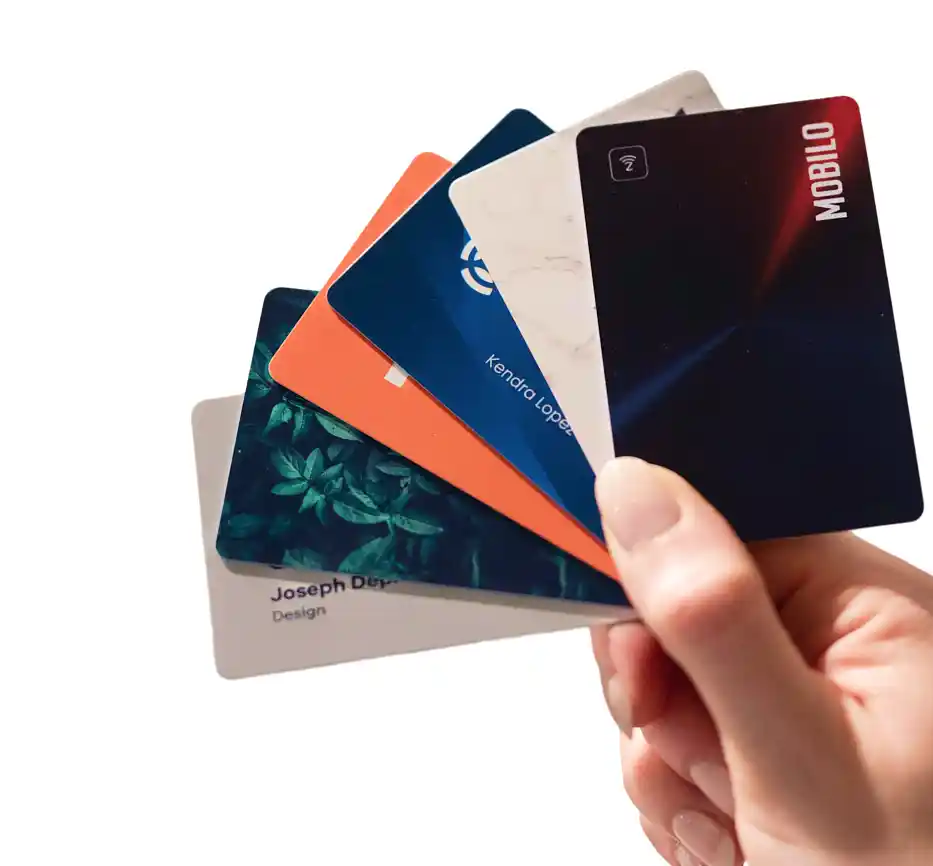
A purpose-built NFC business card works differently from phone-to-phone NameDrop or Android's native tap. When a rep taps their card to any smartphone, the recipient gets a mobile landing page instantly, no app to download, no OS version to check. This hardware-agnostic design matters most in the field, where a rep has no control over what the prospect is carrying.
The CRM Gap Apple and Android Don't Fill After the Tap
Here's what neither NameDrop nor Android's native tap-to-share does: create a record anywhere you can act on. The contact lands in the recipient's phone. The rep gets nothing, no timestamp, no event tag, no CRM entry. A common pattern among sales teams is discovering this gap only after a trade show, when a manager asks for a lead count and the answer is "I'll have to go through my notes." The tap was clean. The pipeline entry never happened.
How Real-Time CRM Sync Collapses the Lead-Decay Window to Near Zero
The math is unforgiving. The standard post-event workflow, batch-entering contacts two or three days later, doesn't just create inconvenience. It mathematically destroys most of a contact's conversion potential before a rep ever opens their laptop. Virtual business cards built on Mobilo's platform fire a real-time lead-capture event and CRM sync at the exact moment of the tap, verified in customer deployment data across enterprise sales teams, collapsing that decay window to near zero. The rep is still in the conversation when the pipeline entry is already logged.
Why Following Up Immediately After a Tap-to-Share Exchange Predicts Whether It Becomes Pipeline
The tap is not the bottleneck. The 3-day average post-event CRM entry lag for trade show contacts, combined with Demand Local's (that same figure) finding that qualification odds drop 6x within the first hour and 100x within 30 minutes, means that native tap-to-share, which does nothing to change the "collect now, enter later" workflow, mathematically destroys the majority of a contact's conversion potential before a rep ever opens their laptop. The teams that consistently convert networking into pipeline aren't the ones with the most taps, they're the ones whose systems log and act on those taps before the conversation goes cold.
100x drop in qualification odds within 30 minutes
"Free NFC business card solutions lack analytics, making it impossible to track leads or measure rep performance, a critical gap for sales teams trying to capture leads, not just share contacts."
Next steps
If your networking contacts are piling up in a phone app while your CRM sits empty until the weekend, the path forward starts with recognizing that the tap itself was never the problem. The 72-hour dead zone between the tap and the pipeline entry is.
The cross-platform compatibility gap means that a significant share of real-world phone-to-phone tap exchanges, particularly iPhone to Android, produce nothing more than a browser-opened vCard link, not a clean contact transfer. That alone breaks the "one tap completes the exchange" assumption most reps carry into a trade show. Add the qualification math: odds of converting a lead drop 6x within the first hour and 100x within 30 minutes of initial contact.
A workflow that logs leads two or three days after the event doesn't just create inconvenience. It mathematically eliminates most of the conversion potential before a rep opens a laptop. Both findings point to the same corrective step: replacing a delivery-only mechanism with a capture system that fires a CRM record at the moment of tap, not after the event debrief.
For a deeper look at how NFC cards handle the capture side that NameDrop leaves open, see virtual business cards for the full workflow.
Frequently Asked Questions
How do I turn NameDrop on or off on my iPhone?
Go to Settings → General → AirDrop and toggle "Bringing Devices Together" on or off. NameDrop requires iOS 17 or later on both devices, so confirm your iOS version first.
How do I enable tap-to-share on my Samsung or Android phone?
Search for NFC in your device settings and make sure the NFC toggle is switched on, the same toggle that enables tap-to-pay also arms contact sharing. If tap-to-pay already works on your Samsung, contact sharing is already enabled.
What's the difference between NameDrop and an NFC business card?
NameDrop is a phone-to-phone feature that requires both parties to be on iPhone running iOS 17 or later, and it records nothing on the sender's side after the exchange. A purpose-built NFC business card works with any smartphone without an app, bypasses OS version requirements entirely, and, when built on a platform like Mobilo, fires a real-time lead-capture event and CRM sync at the moment of the tap.
If NameDrop works so well, why doesn't my prospect's contact end up in my CRM?
Because NameDrop is a delivery mechanism, not a capture system, your contact is sent to the recipient's phone, but nothing is logged on your side: no name, no timestamp, no pipeline record. The post describes this as an architectural boundary, not a bug, and notes that the average sales rep takes up to three days after a trade show to manually log contacts, a window where warm leads go cold.
Does tap-to-share work between an iPhone and an Android phone?
Not natively. iOS restricts background NFC to Apple's own NameDrop protocol, so there is no native cross-platform handshake when an Android device taps toward an iPhone. The fallback is a browser-opened vCard link the iPhone user must manually save, which is not a true tap-to-share. A hardware-agnostic NFC business card removes this OS compatibility problem entirely.