Exhibitions are 40.8% of the average exhibitor's marketing budget. They are also the hardest line to defend.
B2B exhibitions account for 40.8% of exhibitor marketing budgets, the single largest line in the plan. On Wednesday, Anteriad published a survey that explains why that line keeps getting cut anyway.
The report is the UK and EMEA edition of its 2026 B2B Marketing Edge. Of the 221 UK marketers surveyed, 83% exceeded their marketing goals and 81% reported higher revenue. Then came the reward. Seventy percent got a budget increase, only 6% got one worth more than 20%, and more than half said they lack full confidence in their own budget process.
The obvious reading is that British marketing had a good year and finance did not notice. The report's own reading is tidier. Only 34% of UK respondents qualify as what Anteriad calls Data Heroes, marketers using the right data to convert audiences with the impact proven in pipeline. Prove it and the budget follows. Brahim Samoud, Anteriad's president for EMEA, put it plainly in the release: get buying groups, optimisation and measurement right "and you walk into every budget conversation with proof instead of a pitch."
He is right. That is also the problem.
74% of the top group can trace revenue to closed deals
The UK figures are a cut of a larger study: 631 marketing decision makers across the US, UK and APAC at companies with 250 or more employees, fielded in March with Ascend2. In that data, the thing separating Data Heroes from everyone else is attribution. 74% of them report full visibility into attributing marketing activity to closed revenue, against 51% of the rest. Full funnel attribution is the sharpest divider in the whole study: 45% of the marketers who prioritise it significantly exceeded their goals, against 24% of those who do not.
Attribution visibility does not measure whether marketing worked. It measures whether marketing was legible. Legibility is mostly a property of the channel, not of the work. A channel that produces a click produces its own evidence. A channel that produces a conversation produces a memory.
43% against 18%, and part of the gap is a spreadsheet
The performance gap is real. 43% of Data Heroes significantly exceeded their primary goals against 18% of everyone else, which Anteriad frames as a 2.4x edge. Nobody should wave that away. Teams that can trace revenue do make better calls, and faster ones. The UK trails on the report's own measures: fewer Data Heroes than the global average, 34% against 40%, and fewer buying groups implemented, 35% against 38%. And 83% of them beat their goals anyway.
The penalty for illegibility is specific. Marketers whose measurement did not line up with finance reported increased scrutiny on spending at 39%, delayed strategic initiatives at 35%, and outright budget reductions at 36%.
"Finance is not being unreasonable," says Pieter Limburg, Mobilo's CEO. "They fund what they can audit. If your best channel has no audit trail, that is your problem to fix, not theirs."
One caveat belongs here rather than in a footnote. Anteriad sells B2B data. The study was run with Ascend2, and the UK edition arrived as a press release rather than as independent research. This is a data company reporting that the marketers who win are the ones with better data, which is roughly a locksmith's assessment of your front door. The finding survives anyway, because the mechanism does not care who paid for it.
The biggest line in the plan is the one that cannot count itself
CEIR's 2026 Marketing Spend Decision Report is where the 40.8% comes from, and it is not a rounding error in a media plan. It is the largest single category exhibitors buy. Nancy Drapeau, the organisation's vice president of research, said that even as exhibitors expand their use of digital channels, face to face exhibitions remain their single largest marketing investment.
It is also the least legible line anyone owns. It is where the honest answer to which deals moved is a badge photo and somebody's recollection of a Tuesday, and where the relationship leaves with the rep who built it. We have written before about what happens when a CRM is written from memory. We have also argued that a free registration is a manufactured number. The reverse failure costs more: a real relationship that never becomes a number at all.
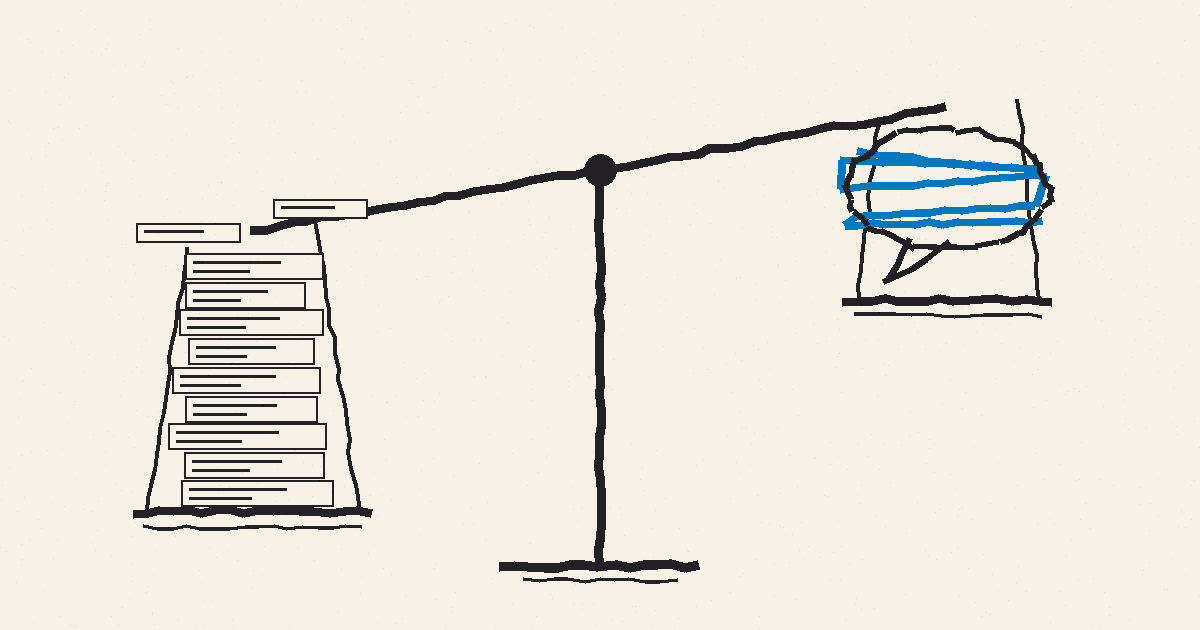
So the largest line in the budget is the one with the weakest paperwork, in a year when paperwork is what gets funded. Budget does not follow performance, it follows provability, and the two only look identical in channels that count themselves.
Make it countable before you defend it
The next planning round will not fund what worked. It will fund what was written down, and those are different lists. If the biggest line in your plan is also the least countable one, then the work this quarter is instrumentation rather than advocacy: capturing the contact at the handshake instead of reconstructing it on the flight home, attaching the context while it is still accurate, and putting event contribution inside the same report as paid search rather than on a slide next to it. There are worked frameworks for doing this, and none of them start with a better slide.
Do that and 40.8% of the budget stops being an anecdote. Skip it, keep beating your goals, and you will keep beating them at 6%.
Undivided Attention is powered by Mobilo.
"Finance is not being unreasonable. They fund what they can audit. If your best channel has no audit trail, that is your problem to fix, not theirs."
Pieter Limburg, CEO, Mobilo
- Anteriad, 2026 B2B Marketing Edge: UK/EMEA report, via GlobeNewswire, 24 September 2026.
- Anteriad, The 2026 B2B Marketing Edge: Control is the Competitive Advantage. 631 respondents, US, UK and APAC, 250+ employees, fielded March 2026 with Ascend2.
- MarketScale on the same study: the 2.4x figure, full funnel attribution, and the CFO misalignment consequences.
- Demand Gen Report, corroborating summary of the study.
- CEIR 2026 Marketing Spend Decision Report, via Trade Show Executive, 8 May 2026.
- Undivided Attention, on the CRM written from memory.
- Undivided Attention, on free registration as a manufactured number.
