LinkedIn sold the AI writing tools. Now everyone gets a slop-stop button.
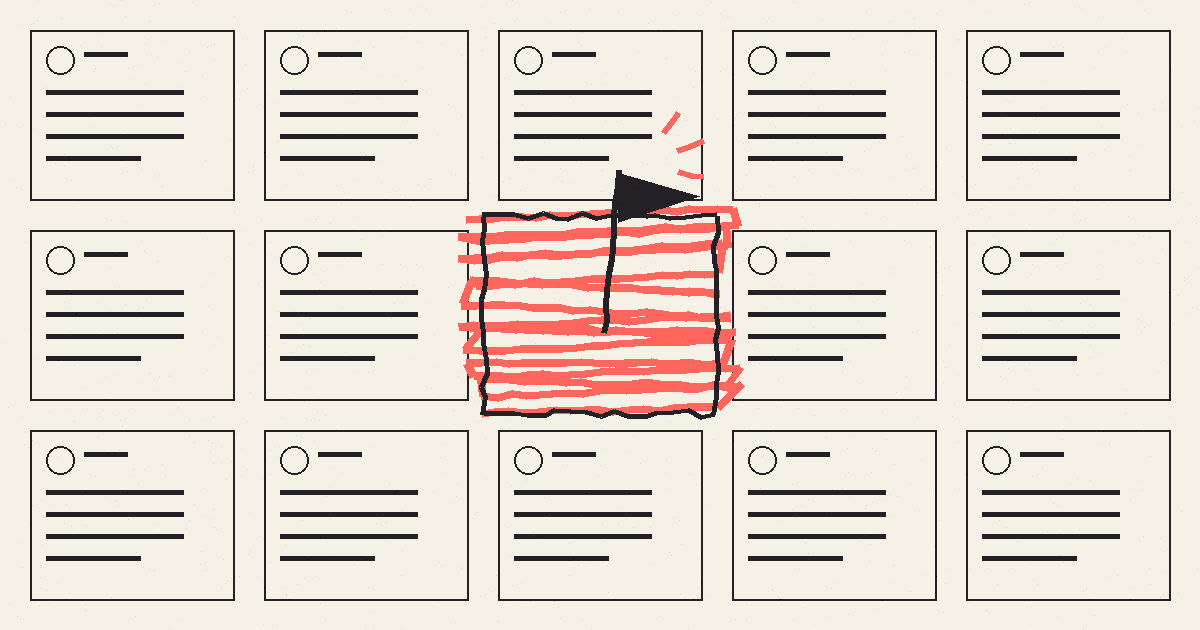
LinkedIn built AI writing into its own composer, a Write with AI button under every post box. On July 30 it handed its billion members a button that reports the results.
The new option, labeled "Seems like AI slop," sits in the three dot menu on every post. Flags feed a set of classifiers that decide how much reach a post gets in suggested content beyond the author's network, and authors whose posts read as inauthentic get a private flag in their analytics dashboard. Chief product officer Hari Srinivasan announced the package alongside a striking admission of scale: LinkedIn now blocks hundreds of thousands of automated comment attempts every day, plus millions of other automation attempts in the past couple of months. And in the same breath, the company killed its own "enhance your post" AI writer, replacing it with a proofreader that fixes grammar without touching your voice.
The obvious reading is platform housekeeping. The numbers say it is a repricing.
40% of the feed, flagged
Three weeks before the announcement, detection firm Pangram published a study of more than a million social posts. LinkedIn was the most AI saturated platform measured: more than 40% of long form posts were flagged as fully AI generated, and while LinkedIn made up a third of everything scanned, it accounted for 62% of all the AI content Pangram found. Substack CEO Chris Best had already turned that reputation into a product pitch, writing on X that his platform built in a Pangram scanner "because we're sick of slop and we don't want substack to turn into LinkedIn." Pangram itself noted the sharpest detail of the whole saga: an earlier LinkedIn executive announcement about detecting and downranking AI posts was, per its model, itself AI generated.
Belief is the new distribution
Here is why this is bigger than a moderation feature. For a decade, the professional feed treated publishing volume as a proxy for authority. Post often, sound polished, and the algorithm read you as a thought leader. AI broke that proxy by making volume free. When 40% of the long posts in the feed are machine written, polish carries no information, and the scarce commodity becomes the thing machines cannot fake: the reader's belief that a human was actually here. LinkedIn's button is the platform formally repricing its feed around that scarcity.
Notice what the enforcement mechanism is. Srinivasan was explicit that LinkedIn wants members, not detectors, to define what feels authentic, telling readers the goal is feedback from real humans rather than an AI detector that gets it wrong. That choice matters. A detector asks whether AI touched the text. A reader asks whether you were present in it. The second standard is stricter, it cannot be gamed with a humanizer tool, and it is now wired directly into distribution.
The exposure for brand teams
For a brand or marketing leader, the exposure is concrete. Employees already introduce the brand however they like, and there is no visibility into what reps hand out. Until now the worst case was an old logo and a broken LinkedIn page. The new worst case is a sales team running AI drafted posts under the company's name while readers, including competitors and customers, quietly file slop flags that teach the classifiers to bury everything that sounds like you. The penalty is private, cumulative, and invisible from the outside, which makes it the exact kind of brand damage that never shows up in a dashboard until the reach is gone.
The uncomfortable part for content teams is that the last two years of best practice built this liability on purpose. Ghostwritten founder posts, AI personalized outreach at scale, and comment automation all rested on one assumption: that manufactured presence converts like real presence. LinkedIn just told you it is training models on reader flags to price the difference.
Write it yourself or lose the reach
So here is the position. Founder led content only works if the founder actually wrote it, and the gap between the two is no longer a matter of taste but of distribution. Over the next year the winners on LinkedIn will publish half as often and convert better, because every believed human post will be worth more in a feed that suppresses the rest. And the budget currently paying for content volume will migrate to the one place presence cannot be simulated at all: the rooms where your buyers already are. The platforms are converging on what the best operators already knew. Attention is not earned at scale. It is earned in person, one believed human at a time.
"AI content is the yada yada of thought leadership. It skips right past the part people came for. AI should sharpen your take, not supply it. The moment it supplies the take, you joined the 40% and inherited there reach."
Pieter Limburg, house analyst, Undivided Attention
- TechCrunch, July 30: announcement details, Srinivasan statement, automation-blocking figures, AI writer removal
- Fortune, July 31: Pangram 40% long form and 30% short form figures
- Pangram, July 2026: primary study, one million posts, 62% share, the flagged executive announcement
- Gizmodo, July 30: Chris Best X quote
- Forbes, July 30: Srinivasan on human feedback vs detectors
- Inc., August 2026: reach determination beyond network
